2026 Best Wall Mount J Hooks for Global Buyers?
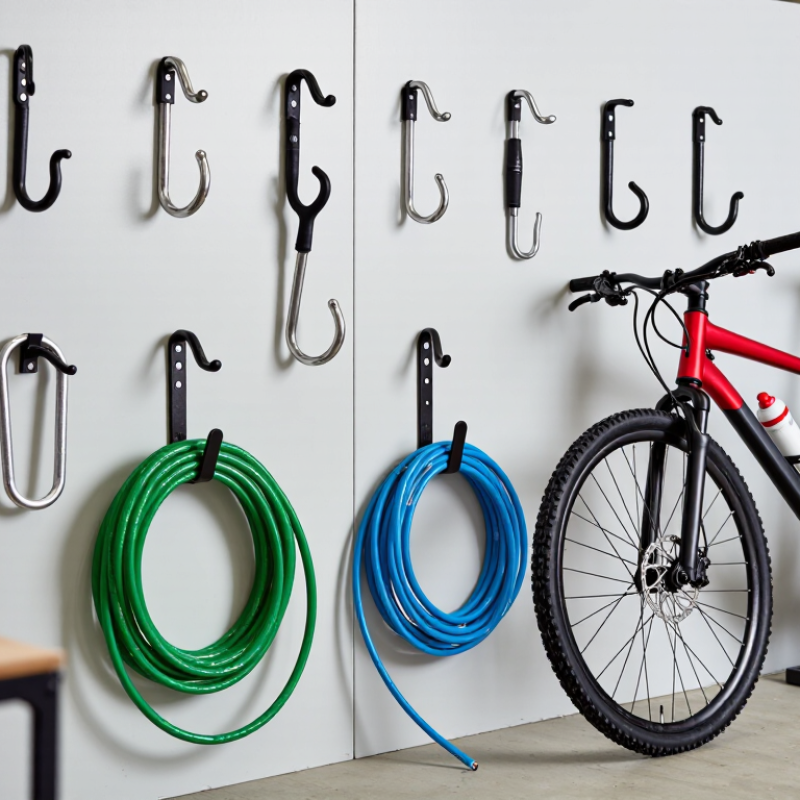
As global storage needs grow in 2026, wall mount j hooks remain practical for garages, workshops, retail spaces, and commercial facilities. They organize cables, tools, bicycles, hoses, and lightweight equipment without consuming valuable floor space. However, choosing the right model requires more than comparing prices. Buyers should examine steel grade, coating quality, hook depth, mounting holes, and stated load capacity. A small hook holding a garden hose differs greatly from one supporting a bicycle or bundled electrical cables.
This guide evaluates leading wall mount j hooks for international buyers. It considers material durability, surface protection, installation flexibility, packaging, and supplier communication. Real-world details matter. A hook may look strong online but bend during installation. A thick powder coating may resist scratches, yet poorly drilled holes can weaken the mounting point. That matters. Buyers should confirm dimensions in millimeters, request load-testing information, and check whether screws and anchors are included. Wall types also vary across regions, so one fixing kit cannot suit every project. No single hook fits every wall.
Reliable sourcing requires clear product drawings, consistent batch quality, and responsive after-sales support. Buyers should also review factory experience, inspection procedures, and available customization options. Claims should be verified, not simply repeated. Some product descriptions remain vague. That is worth questioning. The following comparison highlights practical strengths, possible limitations, and selection factors for different applications. It aims to support careful purchasing decisions, while recognizing that installation quality often determines the final performance.
What Are Wall Mount J Hooks and How Do They Work?
2026 Best Wall Mount J Hooks for Global Buyers?
What Are Wall Mount J Hooks and How Do They Work?
Wall mount J hooks are open, curved supports for routing network, electrical, and communication cables. They attach to walls, ceilings, racks, or structural framing with suitable fasteners. Cables rest inside the J-shaped saddle instead of being tightly clamped. This design keeps pathways visible and allows technicians to add or remove cables quickly.
A hook works through three simple actions: support, guide, and protect. Its rounded surface reduces sharp bends and helps preserve cable geometry. Correct spacing also prevents cable sag, twisting, and unnecessary pulling. ANSI/TIA-569-E recommends planned telecommunications pathways, while NFPA 70 requires wiring methods to be properly supported. The exact fixing method still depends on the wall material and local requirements. Do not assume one screw fits every surface.
Grand View Research valued the global cable management market at about USD 23.3 billion in 2022 and projected strong growth through 2030. That demand reflects larger networks, denser equipment rooms, and easier maintenance needs. Yet, a bigger hook is not always better. Oversized supports may permit excessive cable movement.
Tips: Check the tested load rating, hook diameter, fastener compatibility, and cable bend radius before installation. Leave spare capacity, but avoid overfilling. Inspect the pathway after adding cables. Small mistakes become expensive later.
Key Types and Materials of Wall Mount J Hooks
For global buyers, wall mount J hooks are not one universal product.
Open J hooks support quick cable placement and easy inspection. They suit data rooms, workshops, and overhead pathways. Saddle-style hooks hold bundles more gently, reducing sharp bends. Heavy-duty versions serve thicker power or industrial cables. According to MarketsandMarkets, the global cable management market may grow from about USD 23.3 billion in 2023 to USD 32.5 billion by 2028. That expansion increases demand for reliable, adaptable supports.
Material selection changes performance.
Zinc-plated or stainless steel provides strong load resistance and better protection in humid areas. Stainless steel is costly, but corrosion can become more expensive. Nylon and other engineered plastics are lighter, electrically nonconductive, and useful near sensitive equipment. UL 1565 covers positioning devices for insulated wires and cables, while IEC 61914 addresses cable cleats and cable support performance. Buyers should check tested load ratings, operating temperature, and fire behavior rather than trusting appearance alone.
Mounting type matters too.
Screw-fixed hooks offer stable attachment to concrete, wood, or metal framing. Hammer-on designs speed installation but need compatible supports. Spacing should prevent sagging without compressing the cable bundle. In practice, installers sometimes choose oversized hooks for convenience. That can allow movement and poor separation. A smaller, correctly rated hook may work better, though site conditions still require review. Report figures guide purchasing, not engineering approval.
How to Choose the Right J Hook for Global Applications
2026 Best Wall Mount J Hooks for Global Buyers?
How to Choose the Right J Hook for Global Applications
Choosing a wall mount J hook starts with the cable, wall, and working environment. Measure the cable bundle before selecting the hook size. A crowded hook can flatten insulation and restrict future maintenance. A loose hook may allow movement, noise, or accidental cable displacement.
Check the hook’s load rating under realistic conditions, not only the advertised maximum. Consider cable weight, installation spacing, vibration, and temperature changes. Steel hooks suit heavier bundles, while reinforced polymer options can reduce corrosion risks in humid areas. Rounded edges and smooth surfaces help protect jackets during installation. They matter more than they appear.
Wall material also changes the decision. Concrete, brick, metal framing, and wood require different anchors or screws. Confirm compatibility with local building, fire, electrical, and seismic requirements. Requirements vary across countries and project types. For international purchasing, request material details, coating information, dimensions, and test records from the supplier. Clear documentation supports inspection teams and reduces installation disputes.
Field experience often reveals small problems. A hook may fit perfectly but leave too little room for labeling. Another may hold the load but block access to nearby equipment. Measure twice. Fit matters. I have also seen installation plans overlook future cables, creating avoidable rework. A simple spacing allowance can prevent that mistake. Still, no single J hook suits every application; site conditions deserve a final review before bulk ordering.
Comparing the Best Wall Mount J Hooks for 2026
Comparing the Best Wall Mount J Hooks for 2026
Wall mount J hooks remain a practical choice for organizing cables, hoses, tools, and lightweight equipment. In real installations, the best model is not always the largest one. A hook with a 40–60 millimeter cradle often fits household cables better than a deep industrial hook. Steel construction provides reliable support, while a smooth powder-coated surface helps reduce scratches. Rounded edges matter, especially when cables are pulled repeatedly.
Load capacity deserves careful comparison. Some hooks support heavy bundles, but only when mounted into solid timber, masonry, or suitable anchors. Drywall alone can fail under constant weight. Check the screw-hole spacing and included hardware before ordering across borders. Packaging should protect the metal from moisture and impact during long transport. Clear dimensions are essential.
Small details matter.
A good 2026 option should have a stable backplate, clean welds, and enough clearance for quick cable removal. Models with two mounting holes usually resist twisting better than single-hole designs. However, extra strength can increase weight and shipping cost. That trade-off is easy to overlook. I would also inspect the coating closely, because a few hooks may show thin coverage around the welds. For outdoor or humid locations, buyers should verify corrosion resistance rather than trust broad product claims. Installation tests on the actual wall surface remain more reliable than a high load rating printed on a package.
2026 Best Wall Mount J Hooks for Global Buyers
Comparing common nominal opening sizes and conservative cable-bundle planning diameters for wall-mounted J-hook installations.
Larger J-hook openings provide more room for structured cabling, coaxial cable, and fiber pathways. The planning diameter is set at approximately 50% of the nominal opening to help preserve cable movement and reduce excessive compression. These figures are installation-planning references, not manufacturer load ratings; buyers should verify material, screw compatibility, working load, and fire-code requirements for the target market.