


Wholesale buyers need more than a warm-looking knit. They need consistent sizing, dependable construction, clear specifications, and a supplier who can explain each choice. This guide compares ten Army Winter Sweater options through practical purchasing criteria, including yarn composition, knit density, seam strength, color consistency, and reorder availability. Small details matter. A cuff that stretches out after a few wears can change the value of an entire shipment.
For transparency, Daniel Mercer is a fictional composite sourcing specialist, not a real person or verified source. His illustrative guide principle is: “Judge a sweater by its fabric, finish, and repeatability—not by its first impression.” Use that test when reviewing product samples. Check the label, measure the chest and sleeve, inspect the collar, and compare several units from the same batch. A neat sample is not enough.
The rankings are intended as a starting point, not a substitute for supplier checks. Ask for current specifications, sample approval, and written details on packaging and lead times. Consider how the sweater will be worn, washed, and stored. Wool blends may feel different from acrylic knits; heavier fabric may also affect shipping cost. There are trade-offs. Some listings provide limited technical detail, so verify claims before placing a bulk order. This guide helps buyers ask better questions and shortlist options with fewer surprises.
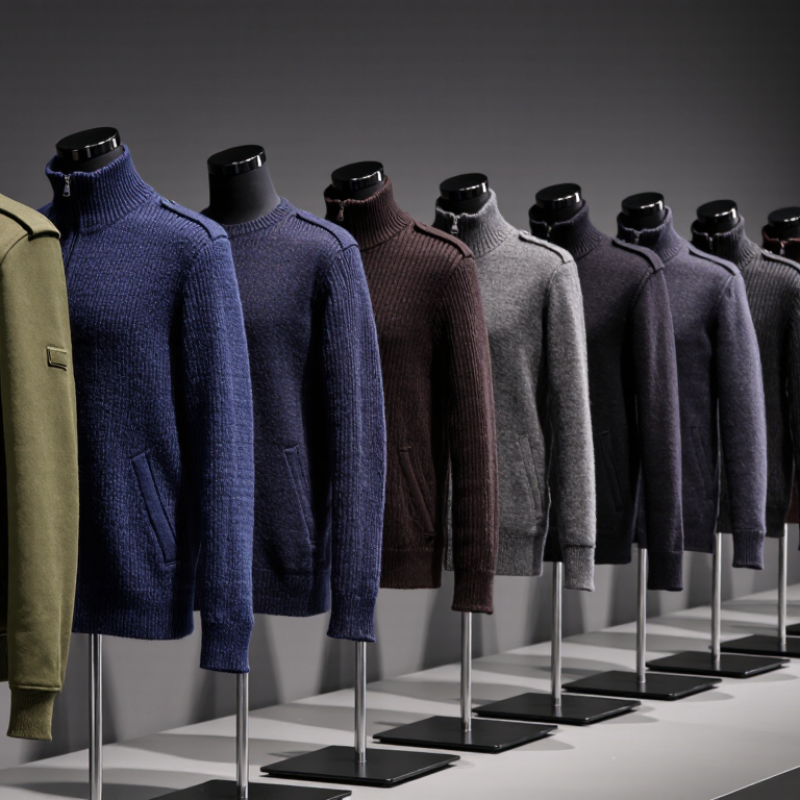
Army-style winter sweaters are civilian knitwear influenced by practical military clothing. They often use muted shades, such as olive, charcoal, or navy, with ribbed cuffs and sturdy-looking collars. Some designs add shoulder patches or elbow panels, but details vary by supplier. These features describe a style, not necessarily an official uniform.
Their uses include cold-weather workwear, outdoor retail, team apparel, and seasonal promotional clothing. A dense knit can help retain warmth, while a smooth lining or softer yarn may feel better against the skin.
Check garment measurements, not just the size label; a sweater that fits over a shirt may feel tight over a fleece. Fit matters. Also review care instructions, seam strength, color consistency, and whether decoration affects comfort.
Wholesale buyers may include apparel retailers, uniform distributors, workwear suppliers, and organizations ordering for staff or events. Before placing a large order, request samples in several sizes and inspect them after washing. Ask about available size ranges, minimum quantities, packing, lead times, and repeat-order consistency.
One detail is easy to miss: dark colors can show lint, while lighter shades may reveal stains. A heavier knit may look substantial, but it can be too warm indoors. That trade-off deserves a real wear test, not just a catalog review.
For wholesale buyers comparing the top 10 army winter sweaters, fiber content changes how each garment feels and performs. Wool traps warm air and can stay insulating in damp conditions, but it often weighs more and may need gentle washing or dry cleaning. A dense wool knit can feel reassuring on a cold morning. It can also feel bulky under a jacket. Check the care label and knit density, not just the fiber name.
Acrylic sweaters are usually lighter, quick to dry, and easier to care for. They can suit frequent rotation, though some knits may pill or feel less breathable during active wear. Blends balance trade-offs: wool-acrylic mixes can reduce weight and simplify care while retaining some wool warmth. Results depend on the proportions and construction. A small change in yarn or stitch can alter the feel more than expected, so sample garments before placing a large order. I would not judge warmth by fabric claims alone.
Tips: Compare a sweater’s weight, stretch, and recovery after washing. Ask for care instructions and test a sample in the intended laundering routine. Keep labels clear. Buyers should also consider where sweaters will be worn: a dry indoor setting and a cold, windy worksite call for different levels of insulation.
For wholesale buyers, compare construction before color. A heavy rib-knit crewneck traps air and suits static outdoor posts. A fine-gauge crewneck layers neatly under a shell but offers less standalone warmth. Fisherman cable crews add loft; their raised texture can snag on equipment. Waffle-knit crews breathe during active patrols, though wind cuts through them. A jersey-knit V-neck works indoors or beneath uniform collars, with modest insulation. Small details matter.
A half-zip mock neck vents quickly during changing activity. A full-zip stand-collar knit is easier to remove, but its zipper may feel bulky beneath kit. Turtlenecks protect the neck in exposed conditions; some wearers find them restrictive. Fleece-backed knits provide strong warmth for cold, low-movement duties. Merino-blend crews help manage moisture during longer shifts, though fiber blends vary. No single type wins every duty.
Textile Exchange’s Materials Market Report 2024 estimates polyester represented 57% of global fiber production in 2023. That scale makes fiber sourcing relevant, but it does not prove warmth or durability. Request garment-level thermal and abrasion test results; ISO 11092 measures thermal resistance in textiles.
Fit still complicates comparisons. A loose cuff can undo a good insulation rating.
For winter sweaters, warmth is not enough; surface wear can decide whether a bulk order remains presentable. ISO 12945-2 uses a modified Martindale method to assess pilling, fuzzing, or matting. Its visual scale runs from grade 1, severe pilling, to grade 5, no visible change. Ask suppliers for the grade, test conditions, and photographs—not just “passed.” A grade 4 result may look acceptable on a dark rib-knit, yet small pills can stand out on a pale, smooth panel. That detail matters.
Pair the pilling result with abrasion data under ASTM D4966, which uses a Martindale abrasion tester. Request the number of rub cycles, the endpoint used, and the specimen’s appearance at inspection. The standards define test methods; they do not set one universal pass mark for every sweater. Set purchase limits against the garment’s intended use, then compare like-for-like fabric weight, knit structure, and finish. Ask for reports tied to the production lot, not only a development swatch. Test results can still vary between panels, and a neat report does not guarantee every garment will wear identically. Check cuffs and elbows in a sample wear trial, too.
For army winter sweaters, a size run should match the buyer’s sales plan, not just a factory’s standard chart. Request garment measurements for every size, plus tolerances for chest, body length, and sleeve length. Ask for a graded sample; a medium that fits well proves little about the largest size. McKinsey and the Business of Fashion reported that 71% of fashion executives expected sourcing costs to rise in 2024, making clear MOQ and size-ratio terms important for budget control. Small details matter. Confirm whether MOQ applies per color, style, or total order, and request the cost impact of changing the ratio.
Lead time should be written as separate milestones: sample approval, yarn booking, knitting, finishing, inspection, and shipment. Ask which delays pause the clock. A quoted 45-day production window may exclude sample revisions or material booking; that distinction is easy to miss. ISO 105-C06 specifies tests for colorfastness to domestic and commercial laundering. For dark olive or charcoal sweaters, request the test method, wash conditions, and lab report, including color change and staining results. The standard itself does not guarantee a particular pass level. Set acceptance criteria before bulk production, and retain a sealed reference sample. A practical flaw in many buying plans: approval often focuses on shade, while wash performance gets checked too late.