





Wholesale buyers need more than a low unit price when choosing Crew Ankle Socks. They also need consistent sizing, dependable construction, and a product customers will reach for repeatedly. A sample may feel soft in hand, yet perform differently after washing. That gap matters.
This guide considers practical details buyers can check before placing a bulk order: fiber content, cuff recovery, toe-seam finish, heel reinforcement, size range, and color availability. It also looks at clear product specifications, repeatable production, and realistic lead times. Request samples in the sizes and colors you plan to stock. Test them with everyday shoes. Check for slipping, bunching, and loose threads after wear and washing. Small details matter. Keep notes, so comparisons rely on more than first impressions.
The ten options below help retailers, uniform programs, and online sellers compare products with different priorities. Some favor breathable cotton blends; others emphasize cushioning, durability, or retail-ready presentation. No single sock suits every customer. Price alone is a weak guide. Minimum order quantities and packaging can change the real cost, too. Supplier claims deserve verification, and a neat sample cannot guarantee every production run will match. Confirm specifications and order terms directly before committing. Fit is personal. That is worth remembering.
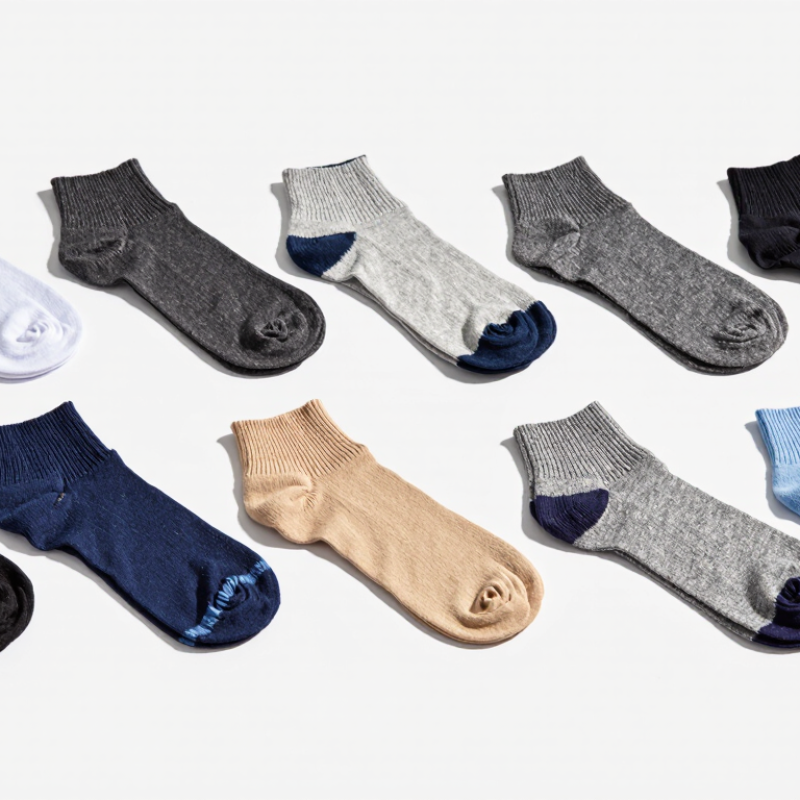
“Crew ankle” is not a universally standardized sock category. A crew sock usually rises several inches above the ankle, resting on the lower calf. An ankle sock typically ends at or just above the ankle bone. The hybrid label often describes a shorter crew cut, but suppliers may interpret it differently. A naming trap.
For wholesale orders, compare actual cuff height rather than relying on the product name. Measure from the heel on a finished sample, and check the fit with the intended shoe. A cuff that looks modest on a flat sample may sit higher when worn. Ribbing, heel depth, and stretch can also change the perceived height. The terminology is imperfect; buyers should specify measurements and request a wear test.
Material choices matter too. Textile Exchange’s Materials Market Report 2024 estimates that global fiber production reached 124 million tonnes in 2023, with polyester accounting for 57 percent. This is broad industry data, not a sock-specific breakdown. Still, it gives buyers useful supply-chain context when comparing polyester blends, cotton-rich yarns, and recycled-fiber options. Ask suppliers to identify fiber content and construction clearly, rather than treating “crew ankle” as a complete specification.
A practical comparison for wholesale buyers evaluating sock styles and product specifications.
How to read this: Ankle socks sit below or around the ankle, while crew socks rise higher on the lower leg. These are approximate cuff-height ranges, not universal standards; measurements and naming can vary by manufacturer. Confirm specifications and samples when sourcing wholesale.
For crew ankle socks, evaluate the full specification, not just the fiber label. Textile Exchange’s Materials Market Report 2024 estimates that global fiber production reached 124 million tonnes in 2023, with polyester making up about 57%. That figure describes the wider market, not sock quality. Still, it makes clear why buyers should request exact fiber percentages and supporting documentation, especially for recycled-content claims. Check yarn feel, knit density, and whether the toe and heel use reinforcing yarn. Small details matter.
Fit is harder to judge from a sample. Ask for measurements after washing, plus size tolerances across production runs. Check that the cuff stays up without leaving a deep mark, and inspect toe seams for bulky ridges. Fit matters. Request colorfastness and laundering results, with test conditions stated; a pass without the method tells you little. For abrasion, ASTM D4966 describes a recognized Martindale method for textile fabrics, but results should be compared only when test settings match. One caution: lab samples may not reflect every production batch. Ask for a pre-shipment sample and record any differences in yarn shade, stretch, or cushioning. A perfect spec sheet can still miss the feel of a sock after a long shift.
Bulk buyers can compare ten crew ankle sock styles by cuff height, fabric, and intended use. Classic ribbed cotton socks offer a familiar fit for everyday orders. Lightweight cotton styles suit warm conditions, while cushioned terry soles add padding for long shifts. Mesh-vented pairs allow more airflow across the top of the foot. Moisture-managing polyester blends can work well for active customers, but fabric claims should be checked against product specifications. Small details matter.
Merino-blend socks provide a warmer option for cooler seasons. Seamless-toe styles reduce bulky seams, though fit varies by wearer. Reinforced heel-and-toe socks target high-wear areas. Uniform styles use restrained colors and consistent cuff heights for schools or workplaces. Grip-sole versions may suit indoor use, where buyers want extra traction. That is ten distinct options, but a style name alone does not confirm quality.
For bulk purchasing, request samples in several sizes and inspect stitching, stretch recovery, and color consistency after washing. Measure the cuff on the wearer, not just on a flat product sheet; “crew ankle” can describe different heights. Check carton quantities and size ratios before placing a large order. It is easy to overlook packaging, and that can complicate storage. A small sample test is less exciting than a catalog photo, but more useful.
| No. | Sock Style | Example Fiber Composition | Cushioning and Construction | Typical Use | Bulk Purchasing Consideration |
|---|---|---|---|---|---|
| 1 | Everyday Cotton Quarter Crew | 75% cotton, 22% polyester, 3% elastane | Light cushioning underfoot; ribbed cuff; reinforced heel and toe | Daily wear, uniforms, and general retail | A versatile core style; offer common adult sizes and neutral color packs. |
| 2 | Lightweight Athletic Crew | 60% polyester, 37% cotton, 3% elastane | Thin, quick-drying knit with a breathable instep panel | Training, walking, and warm-weather wear | Suitable for multipacks; confirm colorfastness and size consistency before a large run. |
| 3 | Full-Cushion Sports Crew | 68% cotton, 29% polyester, 3% elastane | Plush terry cushioning across the sole; elastic arch band | Recreational sports and everyday athletic use | Heavier cushioning uses more yarn; compare unit weight and packed-carton dimensions. |
| 4 | Moisture-Management Performance Crew | 95% polyester, 5% elastane | Lightweight synthetic knit; mesh ventilation zones; smooth toe seam | Running, gym sessions, and activewear assortments | Request wear and wash samples; performance depends on yarn, knit, and finishing. |
| 5 | Merino-Blend Outdoor Crew | 55% merino wool, 40% nylon, 5% elastane | Medium cushioning; reinforced heel and toe; supportive ribbed cuff | Hiking, travel, and cool-weather outdoor use | Check fiber sourcing, care-label requirements, and seasonal demand when planning quantities. |
| 6 | Workwear Crew | 70% cotton, 27% polyester, 3% elastane | Dense knit with reinforced heel and toe; medium-to-heavy sole cushioning | Work boots, service uniforms, and long shifts | Prioritize durable construction and repeatable sizing; test samples with intended footwear. |
| 7 | Recycled-Polyester Crew | 75% recycled polyester, 22% nylon, 3% elastane | Light-to-medium cushioning; smooth synthetic knit | Everyday activewear and sustainability-focused assortments | Request documentation for recycled-content claims and confirm the applicable labeling rules. |
| 8 | Viscose-Blend Soft Crew | 65% viscose, 32% polyester, 3% elastane | Soft-feel, lightweight knit with a comfort-focused cuff | Casual wear and gift multipacks | Check wash-care instructions and dimensional stability; viscose blends may need careful laundering. |
| 9 | Low-Profile Quarter Crew | 72% cotton, 25% polyester, 3% elastane | Light cushioning; shorter quarter-height leg; ribbed top | Sneakers, casual footwear, and warm-weather basics | Specify leg height and cuff measurements on the product sheet to reduce fit variation. |
| 10 | Seamless-Toe Comfort Crew | 74% cotton, 23% polyester, 3% elastane | Flat-linked or smooth toe closure; light cushioning; non-binding rib design | Everyday comfort assortments and uniform programs | Verify toe-closure feel on samples and state the construction accurately in product descriptions. |
| Example sourcing specifications for wholesale planning. Fiber blends, sizes, colors, packaging, and order quantities vary by supplier; confirm final specifications with pre-production samples. | |||||
For wholesale buyers, sock performance starts with fiber choice. Cotton feels familiar and absorbs moisture, but it can stay damp during long shifts. Polyester dries faster and resists abrasion, while nylon can reinforce high-wear zones. Textile Exchange’s Materials Market Report 2024 estimates global fiber production reached 124 million tonnes in 2023, with polyester making up 57%. That scale matters: buyers need to weigh availability against comfort and durability. Still, a popular fiber is not automatically the best one.
Fit depends on more than the size label. A ribbed cuff should hold gently without leaving deep marks, and the heel pocket should stay in place inside a work shoe. Too much stretch can make socks feel tight by afternoon. Flat toe seams reduce rubbing, while targeted cushioning can soften repeated impact. Ask suppliers for wash-test and abrasion-test results, then inspect samples after laundering. I would not judge a bulk order from one fresh pair; that shortcut can miss early pilling or loose elastic.
Tips: Test samples with the intended shoes and a full workday. Compare several washes, not just the first wear. Record shrinkage, cuff recovery, and heel slippage before approving production.
For wholesale crew ankle socks, compare identical specifications before comparing unit prices. Ask every supplier to quote the same yarn blend, fabric weight, cushioning zones, size range, colors, packaging, and carton quantity. Textile Exchange’s 2024 Materials Market Report estimates that global fiber production reached 124 million tonnes in 2023, with polyester accounting for 57%. That makes fiber content an important quote field, not a footnote. Request exact percentages and yarn construction in writing. Small detail.
A useful quote separates sampling, packaging, freight, and other charges. Check minimum order quantities by style and color, payment milestones, sample approval, lead time, and shipment terms. Compare landed cost per sellable pair, not factory price alone. Ask how size tolerances and defect claims are handled; document inspection criteria and remedies in the purchase order. One awkward point: suppliers may define “standard quality” differently. Keep an approved sample beside the bulk-order specifications. Confirm when production timing begins: after deposit, artwork approval, or sample sign-off. Leave a buffer. It is easy to underestimate delays.