What Is the Best Type of Paper Bowl for Food Packaging?
Choosing the best Paper Bowl for food packaging begins with a practical question: what will it hold?
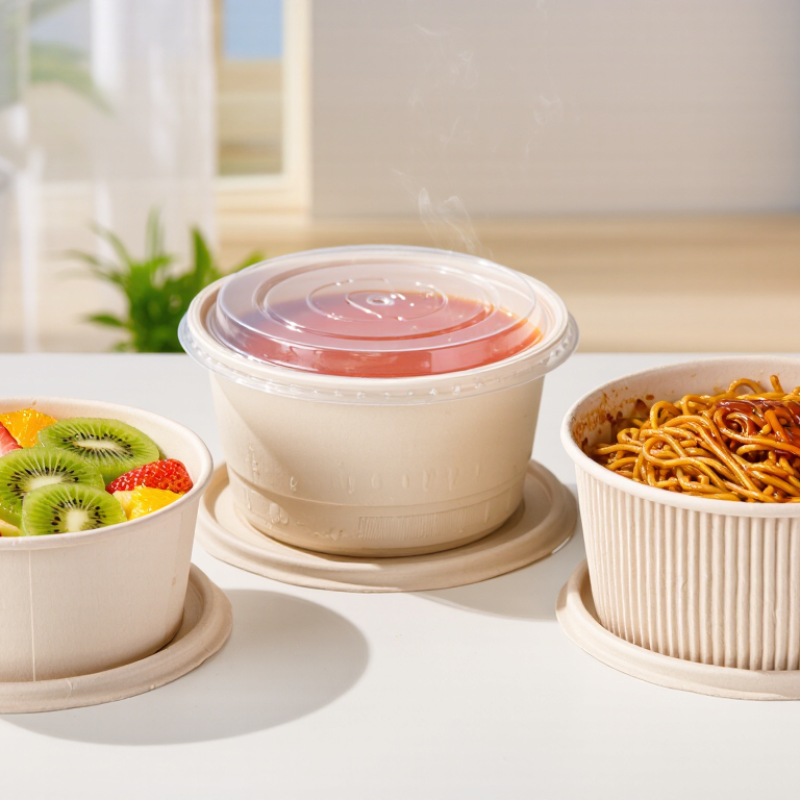
Hot soup, chilled fruit, oily noodles, and dry snacks create different packaging demands. A bowl that performs well with salad may soften quickly under steaming broth. The rim may also lose strength when condensation gathers around the lid.
Dr. Susan Selke, a packaging sustainability expert and author, offers a useful principle: “Packaging should protect the product while reducing its overall environmental burden.” That balance matters when comparing single-wall, double-wall, and corrugated Paper Bowl designs. Single-wall bowls suit lighter foods and controlled serving periods. Double-wall bowls provide better insulation for hot meals. Corrugated structures add rigidity, but they may require more material and storage space.
The coating deserves close attention. PE-lined bowls can resist moisture effectively, while water-based coatings may support different recycling goals. Performance still depends on local recycling systems. “Compostable” is not automatically better. Some facilities cannot process coated food packaging or commercial compostable items.
A reliable choice should match temperature, grease level, serving time, transport distance, and filling equipment. It should also pass leak, compression, and heat-retention tests with the actual food. Small details matter, such as a tight lid fit and a rim that does not collapse during delivery.
There is no universal winner. That is the uncomfortable part.
The best Paper Bowl is the one that protects the meal, supports safe handling, and fits realistic disposal conditions. Buyers should request test data, coating information, and supplier documentation before making a final decision.
Define Paper Bowl Materials by Fiber, Basis Weight, and Structural Strength
What Is the Best Type of Paper Bowl for Food Packaging?
Define Paper Bowl Materials by Fiber, Basis Weight, and Structural Strength
The best paper bowl depends on the food, serving temperature, and expected holding time. Fiber is the starting point. Virgin paper fiber usually offers clean formation, stable stiffness, and reliable folding performance. Recycled fiber can support material efficiency, but its strength may vary between batches. I would not judge fiber by appearance alone. A smooth bowl can still soften quickly under heat or moisture.
Basis weight, measured in grams per square meter, affects thickness and handling. A higher basis weight often creates a firmer bowl, but heavier paper is not automatically better. It may increase material use without solving leakage or deformation. For soup, sauced meals, or oily foods, the paper must work with a suitable food-contact barrier. The coating should resist soaking while preserving the bowl’s recyclability or disposal pathway where applicable.
Structural strength comes from more than paper weight. A rolled rim improves hand comfort and helps maintain the opening. A shaped sidewall reduces buckling, while a well-sealed bottom limits seepage. In practical testing, fill the bowl with hot food, hold it for the intended service period, and check the base, rim, and sidewall. Small failures matter.
Tips: Compare samples under real conditions. Test hot, cold, wet, and greasy foods. Check stacking stability too. A slightly lighter bowl may perform better when its geometry is designed well. Performance data is useful, but field observation still deserves attention.
What Is the Best Type of Paper Bowl for Food Packaging?
Paper bowl performance depends on fiber quality, basis weight, and structural strength. Long virgin fibers generally provide better stiffness and resistance to buckling, while recycled and molded fibers can offer useful performance with different sustainability and moisture-resistance characteristics.
The basis-weight figures are representative midpoint values from common food-packaging specifications. The structural-strength score is a comparative 1–5 rating based on fiber length, stiffness, resistance to buckling, and performance in typical bowl structures; it is not a substitute for laboratory compression testing. Moisture, coatings, rim design, and bowl geometry also affect final performance.
Compare PE, PLA, and Aqueous Coatings Under ASTM D6400 and EN 13432
Choosing a paper bowl coating depends on disposal conditions, not appearance alone. PE coating offers strong moisture resistance and reliable heat performance. However, polyethylene is plastic and does not meet ASTM D6400 or EN 13432 compostability requirements. It suits conventional waste systems, but creates a difficult recycling challenge when bonded to paper.
PLA coating can support industrial composting claims when the complete bowl passes the required tests. ASTM D6400 and EN 13432 assess biodegradation, disintegration, compost quality, and restricted substances. Certification must cover the finished bowl, not only the PLA film. In practical trials, PLA bowls can soften with very hot, oily foods. That detail matters during filling, transport, and serving. Aqueous coatings use water-based barrier layers, but “aqueous” does not automatically mean compostable. Their chemistry, application weight, inks, adhesives, and paperboard all influence compliance. Some perform well in fiber recovery systems; others need industrial composting validation.
Tips: Ask for current test reports for the complete product. Check whether the report names ASTM D6400, EN 13432, or both. Confirm local composting access before printing a disposal message. Test soup, steam, and a 30-minute holding period. Real use exposes weaknesses.
A cautious review is worthwhile. Laboratory results may not predict every kitchen. That is often overlooked.
Evaluate Food-Contact Safety Under FDA 21 CFR 176.170 and EU 1935/2004
What Is the Best Type of Paper Bowl for Food Packaging?
Evaluate Food-Contact Safety Under FDA 21 CFR 176.170 and EU 1935/2004
The best paper bowl is not chosen by thickness or appearance alone. For direct food contact, select paperboard with a documented food-contact formulation and a suitable functional barrier. Virgin fiber can offer a simpler compliance profile, but recycled fiber may require tighter control of contaminants. The intended food matters too. Hot soup, oily noodles, acidic fruit, and frozen meals create different migration risks.
Under FDA 21 CFR 176.170, paper and paperboard components must meet requirements for contact with aqueous and fatty foods. Testing conditions should reflect the food type, temperature, and contact time. A supplier’s declaration is useful, but it should identify coatings, adhesives, inks, and processing aids. “Food grade” alone is not enough.
The EU framework under Regulation 1935/2004 requires materials to avoid transferring substances that could endanger health or change food composition. It also requires traceability and suitable manufacturing controls. The regulation is broad; supporting national rules, specific measures, and migration evidence may also apply. A bowl passing one test is not automatically suitable for every recipe. This is where packaging reviews often become too confident. Ask for test reports, intended-use limits, and evidence for the finished bowl, not only its raw paper. Small details matter, including rim leakage, coating damage, and storage humidity.
Select the Best Bowl by Heat, Grease, Moisture, and Load Performance
What Is the Best Type of Paper Bowl for Food Packaging?
Select the best bowl by heat, grease, moisture, and load performance. A bowl that handles soup may fail with fried food. Heat resistance starts with board structure, coating stability, and rim strength. For hot meals, test the bowl at the actual serving temperature, not only room temperature. Brief exposure can hide softening.
Grease needs a continuous barrier. Water-based coatings can perform well, but formulation and sealing quality matter. For oily noodles or fried chicken, run a timed leakage test with real food. Moisture migration often weakens the sidewall before leakage appears. The UNEP Food Waste Index Report 2024 estimates that 1.05 billion tonnes of food were wasted in 2022. Packaging cannot solve waste alone, but weak containers can worsen it during transport and service.
Load performance also deserves practical testing. Stack filled bowls, apply vibration, and inspect the bottom panel and rim. A lighter bowl may reduce material use, yet it can collapse under delivery pressure. The U.S. EPA’s latest detailed packaging dataset reports 67.4 million tons of paper and paperboard packaging generated in 2018, with 46.9 million tons recovered. That recovery rate shows fiber remains important, but coatings may affect processing in specific facilities. A perfect bowl does not exist. My cautious view: choose the lightest structure that survives heat, grease, moisture, and stacking tests. Laboratory results still need field verification.