





Choosing a Spiral Slide supplier is not just a matter of comparing prices or picking the boldest color. Buyers need equipment suited to the site, expected use, local climate, and maintenance capacity. A slide that looks impressive in a catalog still needs clear dimensions, material details, installation guidance, and dependable replacement-part support. Small omissions matter. A missing drawing can slow a project; a vague warranty can complicate years of upkeep.
Playground researcher Dr. Joe Frost’s published work offers a useful reminder about designing for children’s play. Paraphrased, his perspective is that play environments should encourage movement, exploration, and age-appropriate challenge. That principle helps frame this guide, though it cannot replace project-specific engineering or safety reviews. We compare ten Spiral Slide suppliers through practical questions: What product options do they offer? How clearly do they document specifications? Can they support international shipping and installation? And do their answers remain consistent when buyers ask for details? Look for evidence, not polished promises.
The right supplier depends on more than a product photograph. A coastal park, a school courtyard, and a busy indoor play center may need different materials, layouts, and service plans. Some comparisons will remain imperfect because supplier information is not always presented in the same way. That deserves scrutiny. This guide aims to make the shortlist easier to assess, while leaving room for careful questions before any purchase.
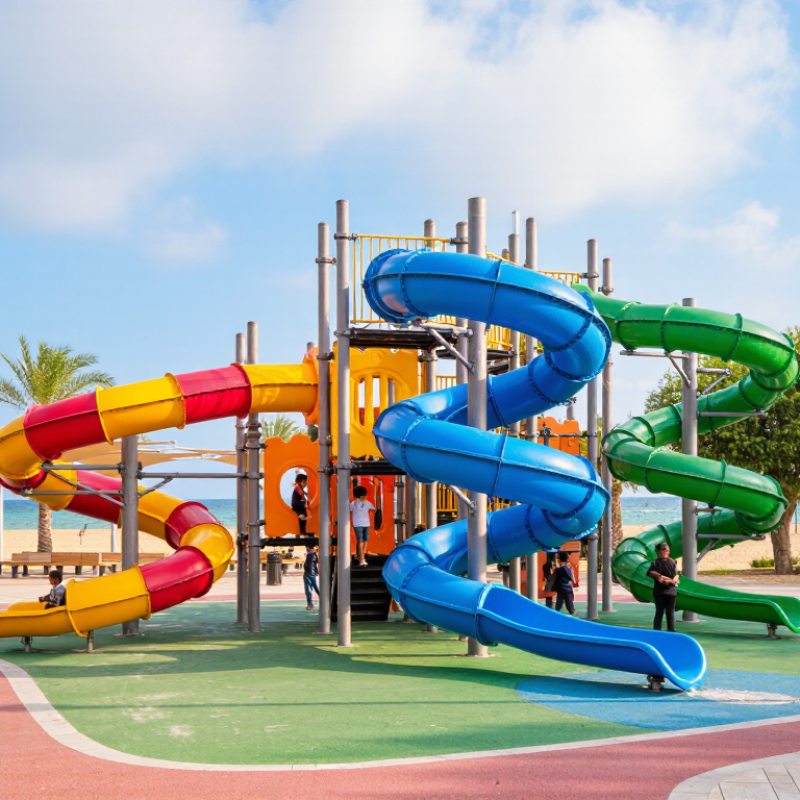
A spiral slide is a curved chute that carries riders downward around a central support. It may be enclosed, partly covered, or open, depending on the setting and design. Its winding route can fit into less floor space than a straight slide, while still offering a noticeable ride.
A tight fit.
In shopping centers, resorts, indoor play centers, and water parks, spiral slides can draw attention to play zones and connect different levels. Their success depends on more than appearance.
For commercial buyers, check the available height and footprint, rider entry and exit points, and the space needed for queues. Surface material, joint finish, drainage, and access for inspection also matter. A rough seam or poor landing layout can affect comfort and daily operation.
Match the slide’s intended users to its dimensions, and review the supplier’s installation guidance and maintenance requirements. A compact footprint can still create crowding if visitors gather near the exit.
That detail is easy to miss on a drawing. Site conditions, staff routines, and the surrounding play equipment should all shape the final choice.
A spiral slide is a shaped structure, not just a colorful tube. When comparing suppliers, review their engineering drawings, material specifications, and project references. Ask for dimensions, recommended user capacity, and details about the support frame and anchoring points. Check whether exposed surfaces resist UV damage and whether joints feel smooth, with no sharp edges or visible gaps. Small details matter. Confirm what inspections and maintenance the supplier recommends, and whether replacement parts are available. A polished catalog can look convincing, yet installation details may remain vague; that gap deserves scrutiny.
Look for clear documentation, including applicable test reports and written warranty terms. Ask how the supplier handles site measurements, delivery, installation guidance, and after-sales questions. Responses should be specific, not simply reassuring. If a proposed slide seems suitable, compare its turning radius, exit height, and landing area with the actual site plan. A supplier may offer a sound product but limited installation support, so assess those separately. References from comparable projects can help, though one successful installation is not a guarantee.
Tips: Request a drawing that shows the slide’s footprint and support locations. Compare the same specifications across quotes. Keep answers in writing, especially when dimensions or site conditions change.
Global buyers comparing spiral slide suppliers should examine engineering, materials, and after-sales support. One supplier may specialize in molded polyethylene slides for compact indoor play areas. Another may fabricate stainless-steel spirals for busy parks. A third may offer modular systems that simplify installation. A fourth may tailor slide height and exit layout to existing structures. A fifth may focus on complete playground packages, coordinating slides with platforms and safety surfacing. Capabilities vary, so verify each supplier’s drawings, material specifications, and documented testing.
Tips: Request a dimensioned drawing and installation requirements before comparing prices. Check how the supplier handles replacement parts and technical questions. A glossy catalog is not proof of consistent manufacturing; ask for relevant project references.
Other supplier profiles may include a specialist in custom colors and finishes, a producer of compact residential slides, and an exporter experienced with protective packing for long-distance freight. A fourth may provide design support for unusual site constraints, while a fifth may focus on clear production timelines and shipment coordination. Ask how parts are protected against scratches and deformation during transit. Confirm that the proposed slide matches the platform height and available landing space. One overlooked detail can cause delays. Supplier claims deserve careful checking.
When comparing spiral slide suppliers, look beyond catalog size. Check whether each supplier offers multiple heights, diameters, entry shapes, and materials. A compact indoor slide and a tall outdoor unit need different support structures. Ask for drawings showing platform height, exit clearance, and anchoring points. Small details matter.
Grand View Research estimated the global playground equipment market at USD 8.3 billion in 2022, with an 8.5% projected annual growth rate through 2030. That report covers many products, not spiral slides alone, so it signals market activity rather than slide-specific demand. For customization, request a written specification covering color, UV resistance, load limits, and site dimensions. A glossy rendering is not enough.
Compare prices on the same basis. Separate the slide, frame, freight, installation, spare parts, and warranty terms. Ask whether quoted materials include stainless-steel hardware and documented impact or weather testing. Request lead times and replacement-part availability in writing. Then compare total delivered cost, not just the unit price. It takes longer. One imperfect point: supplier quotes may still exclude local site preparation, so leave room in the budget.
Global buyers should judge spiral-slide suppliers by the documents that travel with the product, not just polished renderings. Request crate dimensions, installation drawings, shipping terms, and a named contact for customs questions. UNCTAD’s Review of Maritime Transport 2024 reports that maritime trade grew 2.4% in 2023, with 2% growth projected for 2024. Route disruptions can still affect delivery schedules, especially for oversized slide sections.
Safety evidence should match the slide’s setting. For playground installations, ask for documentation against relevant standards such as EN 1176 or ASTM F1487. Water-slide systems require a different assessment, such as ASTM F2376. Check material records, load assumptions, anchoring details, edge finishes, and inspection instructions. Not enough. A certificate alone may not show that the design suits your site. Ask who checks the completed installation and whether the drawings reflect actual ground conditions.
Test after-sales support before placing an order. Get spare-part lead times, warranty exclusions, maintenance intervals, and response targets in writing. Ask for close-up photos of replacement joints, handrails, and wear-prone liners.
Keep one awkward question: who pays if a crate arrives damaged?
I would not assume a quick email means a quick repair. Local technicians and stocked parts can help, but not every supplier offers both.