


Choosing a water bottle label manufacturer is not just a matter of comparing prices. The label must feed smoothly through filling equipment, stay readable on a curved surface, and suit the bottle’s storage conditions. Small details matter. A damp bottle can expose weak adhesive. A sharply curved shoulder can make a poorly chosen material wrinkle.
China has a broad packaging supply base, but manufacturers differ in printing methods, material options, quality controls, and communication. Mike Fairley, a veteran label-industry analyst, has written extensively about label production and application. A practical principle reflected in his work is: “A label must perform beyond the artwork.” That means asking suppliers about sample testing, color consistency, adhesive behavior, and production tolerances—not relying on a polished catalog alone.
This guide examines leading water bottle label manufacturers in China and the capabilities buyers should compare. It considers product range, customization, print quality, order flexibility, and how clearly each supplier explains its process. A sample can look excellent under studio lights. Real conditions are less forgiving. Check it on a chilled, wet bottle, and inspect the edges after handling. No supplier is automatically the right fit for every project; even a strong shortlist needs verification against your bottle, timeline, and specifications.
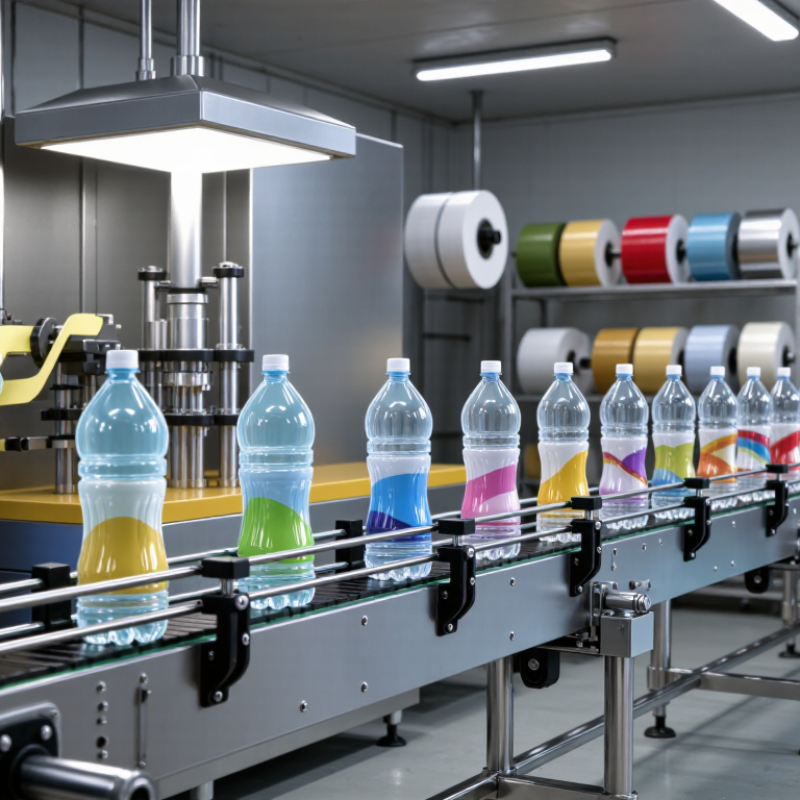
Water bottle labels identify the product, display useful information, and give a plain container a finished appearance. They may be made from paper, polypropylene, or polyester, depending on the bottle shape, moisture exposure, and desired look. A label for a chilled bottle needs adhesive that stays attached when condensation forms. A label for a squeezable bottle must bend without lifting at the edges. Small details matter. Fit comes first.
Production usually begins with selecting label material and adhesive, then preparing artwork for printing. Flexographic and digital printing are common options; the choice depends on order size, color needs, and design changes. Printed samples help check color, text clarity, and alignment before a full run. After printing, labels may receive a protective coating or laminate to reduce scuffing and moisture damage. They are then cut into rolls or sheets for application. Shrink sleeves follow a different path: printed film is formed into a sleeve and later tightened around the bottle with heat. Quality checks should include adhesion, cutting accuracy, and performance on the actual container. A label can look perfect on a flat proof yet wrinkle on a curved bottle. That is easy to miss.
China’s water bottle label sector benefits from a large beverage market and varied production needs. The National Bureau of Statistics of China reported 175.1 million tonnes of beverage output from above-designated-size manufacturers in 2023. This figure is not limited to bottled water, but it indicates the scale of packaging demand. Smithers’ 2023 analysis estimated the global label market at about US$46.5 billion, with demand shaped by materials, print quality, and production efficiency.
Factories in China commonly offer pressure-sensitive labels, shrink sleeves, and wraparound labels. Buyers should compare more than quoted price. Check label adhesion on cold, wet bottles, color consistency across repeat orders, and performance on the actual filling line. Ask for material specifications and a production sample. Small details matter: a label edge lifting in an ice bucket can undermine an otherwise clean package. Still, one successful sample is not proof of stable mass production. Ask about inspection records, lead times, and how the supplier handles color deviations. The landscape is broad, and capabilities vary. A careful trial run can reveal gaps that a sales sheet may not show.
When comparing water bottle label manufacturers in China, check whether their materials suit your bottle and filling conditions. A label that works on dry glass may lift from a cold, damp plastic bottle. Ask for samples applied to your actual bottle shape, then test them with condensation, refrigeration, and routine handling. Small details matter.
Review print consistency, adhesive performance, and production checks. Request color samples, documented inspection steps, and clear tolerances for label size and placement. Ask what food-contact documentation is available for the materials and intended use. A supplier should explain these records plainly, not just promise that everything meets your needs. Ask for proof.
Communication and repeatability deserve equal attention. Confirm how the manufacturer handles artwork revisions, sample approval, order changes, and delivery updates. Ask whether production batches are traceable and how defects are recorded. A glossy sample can be misleading; it may not represent a full production run. It is easy to overvalue price or polished sales materials. Compare the actual test results, response times, and consistency across samples before deciding.
Leading Water Bottle Label Manufacturers in China
China’s leading water bottle label manufacturers stand out through dependable print quality, material options, and production control—not simply low prices. Smithers’ The Future of Label Printing to 2028 forecasts the global label-printing market will reach US$49.9 billion by 2028, reflecting continued demand for well-performing packaging. For bottled water, labels must stay legible on curved, chilled, and sometimes damp containers. Ask suppliers for samples tested on your actual bottle shape and filling line. A glossy sample on a desk proves little.
Experienced manufacturers should explain how they manage color consistency, adhesive selection, and roll specifications. Request a documented quality process, production samples, and clear lead-time details. Check whether the label material suits condensation and your storage conditions. Even small changes in bottle diameter can cause wrinkles or misalignment. I have seen specifications look complete yet miss practical handling details; that is worth questioning.
Tips: Share bottle dimensions, application speed, storage temperature, and artwork files before requesting a quote. Ask for a trial roll, then inspect adhesion and print clarity after chilling. Don’t judge only by the first sample.
| Label Type | Common Materials | Typical Application | Printing Options | Key Advantages | Points to Confirm |
|---|---|---|---|---|---|
| Wrap-around roll-fed label | BOPP film; sometimes paper, depending on the application | High-volume labeling of cylindrical bottles | Flexographic, gravure, or digital printing, depending on the order and supplier equipment | Designed for continuous roll application; film versions can resist moisture during normal handling | Confirm roll direction, core size, roll diameter, seam overlap, and compatibility with the labeling line |
| Pressure-sensitive film label | BOPP, PE, or other label-grade films with a pressure-sensitive adhesive | Bottles requiring individual labels or a flexible label shape | Flexographic, digital, or other processes offered by the converter | Available in clear, white, and other constructions; can suit curved surfaces when properly specified | Test adhesion on the actual bottle surface, especially for chilled, wet, or condensation-prone use |
| Shrink-sleeve label | PETG, OPS, or other shrinkable films selected for the package and process | Bottles with contoured shapes or labels covering a large part of the container | Gravure, flexographic, or digital printing, subject to supplier capability | Conforms to container contours after heating; offers substantial printable area | Confirm shrink profile, seam position, perforation needs, and compatibility with the sleeve applicator and heat tunnel |
| Pressure-sensitive paper label | Coated or uncoated label paper with a suitable adhesive | Applications where a paper appearance is preferred and exposure conditions are appropriate | Flexographic, offset, or digital printing, depending on the supplier and construction | Supports a range of paper textures and printed finishes | Check water resistance, adhesive performance, and suitability for refrigeration or ice-bucket exposure |
| Clear film label | Clear BOPP, PET, or other transparent label films | Packages designed to show the bottle surface through the label | Flexographic, gravure, or digital printing; white ink may be specified where needed | Creates a transparent-label appearance when the film, ink, and adhesive are correctly selected | Review opacity, ink contrast, adhesive clarity, and application conditions using production samples |
General technical comparison only. Material availability, print processes, and performance depend on the supplier, label construction, bottle surface, and application conditions.
When comparing water bottle label manufacturers in China, look beyond the quoted price. Check whether the supplier can handle your label material, bottle shape, and expected production volume. A label may look sharp on a dry sample but wrinkle or lift when chilled bottles collect condensation. Ask for samples made with the proposed materials and printing process.
Request a written quotation that lists setup costs, minimum order quantity, production time, and packaging details. Compare identical specifications, not just the final price. Ask how the supplier checks color consistency, print alignment, and adhesive performance. Clear answers and a realistic timeline are useful signs of dependable communication. A polished catalog can still mislead; I would give more weight to a tested sample and specific process details. Even then, one sample cannot represent every production run.
Tips: Test labels on filled bottles. Chill them, handle them with damp hands, and check for peeling, smudging, or scuffing. Record the results before approving a larger order.