How to Choose the Best Resin Toilet Brush Holder?
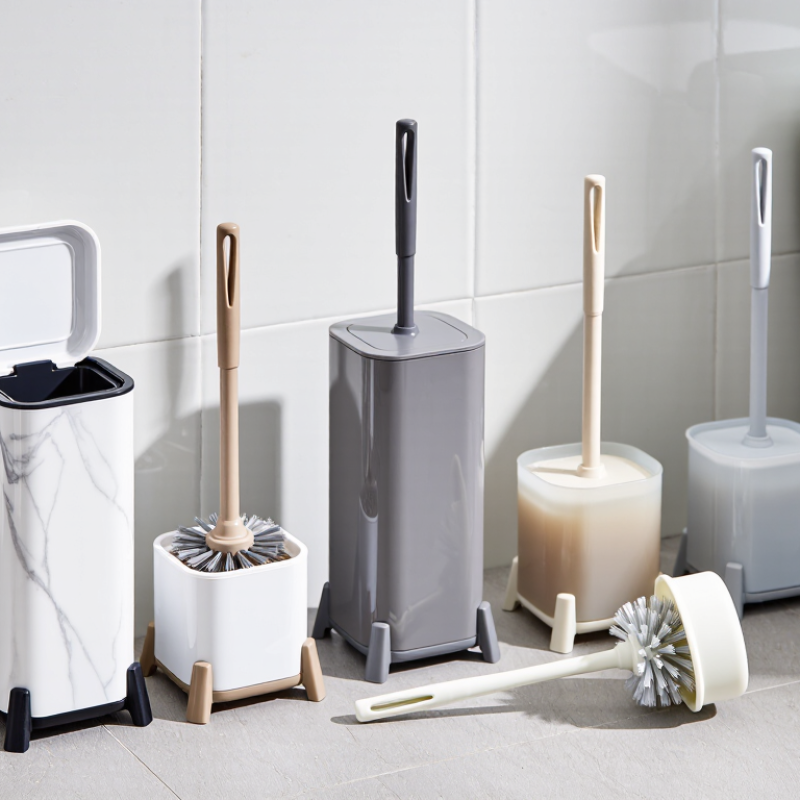
Choosing the best Resin Toilet Brush Holder is about more than matching your bathroom décor. A glossy finish may look polished in a product photo, but water spots, fingerprints, and awkward proportions can stand out beside the toilet. Measure the available space and check the holder’s height, base width, and stability on your floor. Small details matter. Resin designs vary in thickness, finish, and construction, so compare product specifications instead of assuming every model performs alike. In a small bathroom, a narrow footprint may be more useful than an ornate shape.
Look at the brush and holder as a working pair. A removable inner container can make routine cleaning easier, while a stable base helps prevent tipping on smooth tile. Check whether the design allows excess water to drain or dry; trapped moisture can create an unpleasant odor over time. The brush should reach beneath the rim without forcing your hand against the holder. These practical checks are easy to overlook when color and price dominate the decision. I would not treat a decorative finish as proof of durability; care instructions and customer feedback offer better clues. This guide compares size, materials, cleaning features, brush design, and value, helping you choose a holder that suits both your space and daily habits.
Identify Resin Type by Typical Density: PP 0.90–0.91 vs ABS 1.04–1.07 g/cm³
A resin toilet brush holder may look solid, yet appearance alone cannot tell you which plastic it uses. Typical density offers a useful clue: polypropylene (PP) is about 0.90–0.91 g/cm³, while acrylonitrile butadiene styrene (ABS) is about 1.04–1.07 g/cm³. That gap matters.
In practical terms, an equal-sized piece of ABS usually weighs more than a piece of PP. But a finished holder is not a lab sample. Its walls may be hollow, and pigments, fillers, or coatings can change its weight. A water-displacement test on the whole holder can mislead you if trapped air remains inside. Check the details.
Use density as one screening step, not proof of resin identity. Ask the supplier for the material specification, and compare it with the product’s stated weight and dimensions. PP is often chosen for its low weight and moisture resistance; ABS is often selected when a firmer feel or a smooth finish matters. Still, formulation and construction affect performance. I would not choose from density alone; inspect the base, seams, and brush fit, too. A slightly loose holder can wobble on wet tile, regardless of its resin type.
Assess Moisture Resistance Using ASTM D570 24-Hour Water-Absorption Results
When choosing a resin toilet brush holder, consider how it handles routine splashes and damp bathroom air. The ASTM D570 24-hour water-absorption result offers a useful comparison. It measures how much water a material absorbs under specified test conditions, typically as a percentage of its original weight.
Look for a report that clearly states the exposure time and conditioning method. A lower absorption result can suggest the resin is less likely to take up water, but it does not guarantee a trouble-free holder. Test conditions may differ from daily use. Check the base, seams, and any textured areas, where water can collect after rinsing the brush. Small details matter.
In a bathroom, droplets may sit around the holder’s bottom or inside its cup. A smooth, easy-to-dry shape can help limit lingering moisture. I would not treat one test result as a verdict. The holder’s design and cleaning routine also affect how it performs. A tiny drainage gap can help, though it may be awkward to clean. Compare absorption data alongside practical details, rather than choosing by resin type alone.
Compare Impact Strength Using ASTM D256 Izod Test Data
A resin toilet brush holder should survive more than a gentle tap. A brush handle can strike the rim, and a dropped holder may hit a hard tile floor. ASTM D256 measures notched Izod impact resistance by swinging a pendulum into a notched specimen. Results are commonly reported in joules per metre or foot-pounds per inch. Higher values generally indicate greater resistance to this specific impact, not guaranteed product durability.
Published material-property records on MatWeb show why resin type and grade matter: reported notched Izod values for ABS often fall around 200–400 J/m, while polypropylene records can vary widely, sometimes around 20–100 J/m. These are indicative ranges, not pass/fail limits. ASTM International’s D256 method also specifies test conditions, including specimen and notch details. Compare results only when the conditions match; a datasheet number alone can mislead.
Tips: Ask for ASTM D256 results for the actual resin grade, and check whether the specimen was molded and conditioned like the finished holder. Look for the test temperature and notch type. Small details matter. A holder’s ribs, wall thickness, and sharp corners also affect breakage, so lab data cannot tell the whole story. I would not choose by the highest number alone.
How to Choose the Best Resin Toilet Brush Holder? - Compare Impact Strength Using ASTM D256 Izod Test Data
| Resin material | Indicative notched Izod impact strength
(ASTM D256, J/m) | Relative impact performance | Practical considerations for a toilet brush holder | Selection guidance |
| Polycarbonate (PC) | 600–850 | Very high | Strong resistance to sudden knocks and drops. Resin cost and chemical compatibility should be checked for the intended cleaning products. | A strong candidate when impact resistance is the main priority. |
| Polyamide 6 (PA6, nylon 6) | 500–900 | High to very high | Can absorb impact well, but moisture uptake may change dimensions and mechanical properties. Confirm performance in the product’s actual bathroom conditions. | Consider when toughness is important and moisture-related changes are acceptable. |
| Acrylonitrile butadiene styrene (ABS) | 200–400 | Moderate to high | Often used for molded consumer products and offers a useful balance of toughness, appearance, and processability. | A practical balanced option; compare the specific grade’s test data and cleaner compatibility. |
| High-impact polystyrene (HIPS) | 80–200 | Moderate | Impact-modified polystyrene is generally tougher than standard polystyrene, though performance varies with grade and formulation. | Consider for lighter-duty designs where cost and appearance are important. |
| Polypropylene (PP) | 20–100 | Low to moderate in notched testing | Low density and good moisture resistance are useful features. Notched impact results can vary substantially by grade and test temperature. | Evaluate the exact grade and product geometry, especially around thin sections and sharp corners. |
| Unplasticized polyvinyl chloride (PVC-U) | 20–100 | Low to moderate | Rigid PVC-U can be sensitive to impact, particularly at lower temperatures; formulation and wall design affect performance. | Check grade-specific data and avoid relying on material choice alone to prevent breakage. |
How to interpret the figures: These are indicative material-level ranges for comparison, not test results for finished toilet brush holders or a guarantee for any particular resin grade. ASTM D256 results depend on specimen preparation, notch, thickness, conditioning, and test temperature. Request grade-specific ASTM D256 data and, where possible, test the finished design under representative conditions before making a final selection.
Check Brush Fit, Holder Dimensions, Drainage, and Ventilation
A resin toilet brush holder should fit the brush without trapping its bristles against the sides. Measure the brush head and handle, then compare them with the holder’s usable interior—not just its outside dimensions. Leave room for the head to settle without scraping the rim. A close fit looks tidy, but it can slow drying. I learned that the annoying way.
Check the base for a removable insert or a small drainage channel. Water should collect where it can be emptied, not pool around the brush head. Look for a stable, wide footprint too; a tall, narrow holder can tip when the handle leans. Resin is easy to wipe, but seams and deep corners still need occasional cleaning. Details matter.
Ventilation helps the brush dry between uses. The Home Ventilating Institute recommends bathroom exhaust ventilation of at least 50 cubic feet per minute for intermittent operation. That figure applies to the room, not the holder, but it supports keeping damp air moving. The U.S. Environmental Protection Agency recommends indoor relative humidity below 60%, ideally between 30% and 50%, to help limit moisture problems. A ventilated holder cannot replace a bathroom fan. Check that air can reach the bristles, and avoid sealed lids. Drying may still take longer than expected.
Evaluate Chemical Resistance, Surface Finish, and Cleaning Needs
A resin toilet brush holder should match the cleaners you actually use, not just look sturdy on a shelf. Check the care instructions for guidance on bleach, disinfectants, and other common cleaners. Resin formulas differ, so “water-resistant” does not guarantee resistance to every chemical. Keep that in mind. If the holder will sit near a frequently cleaned toilet, choose one with clear cleaning guidance and avoid leaving chemical residue on its surface. When product details are limited, ask the supplier rather than assuming all resin behaves alike.
Surface finish affects everyday upkeep. A smooth interior is usually easier to rinse, while deep grooves or decorative ridges can trap water and residue. A glossy exterior may wipe clean quickly, but it can show scratches and dried water spots under bright bathroom lighting. Consider how often you are willing to clean it. If the holder has a removable drip tray, check that it lifts out easily and has no tight corners. Small details matter. A practical choice may look less elegant, and that trade-off deserves a moment of thought.