
How to Choose the Right Hanging Hooks for Any Space

Choosing the right hanging hooks begins with the wall, not the hook.

A painted drywall surface behaves differently from tile, brick, wood, or metal. Moisture, weight, vibration, and daily use also change performance. The 2024 U.S. Houzz & Home Study reported a median renovation spend of $24,000 in 2023. That figure reflects a practical truth: small hardware choices deserve attention during larger home projects. A beautiful entryway can still fail if one overloaded hook pulls away from the wall.

Start with the object’s real weight. Add extra allowance for wet towels, full bags, or winter coats. Then compare that figure with the manufacturer’s stated load rating. The rating may depend on screws, anchors, adhesive, or a specific mounting surface. It is not universal. Read the fine print.

Surface matters most.

The U.S. Consumer Product Safety Commission advises following installation instructions and using suitable hardware for secure household fixtures. This guidance supports a careful selection process. Use masonry anchors for concrete or brick. Choose appropriate drywall anchors when studs are unavailable. For heavy items, fastening directly into a stud is usually more dependable. In humid rooms, corrosion-resistant finishes can prevent ugly rust marks and early failure.

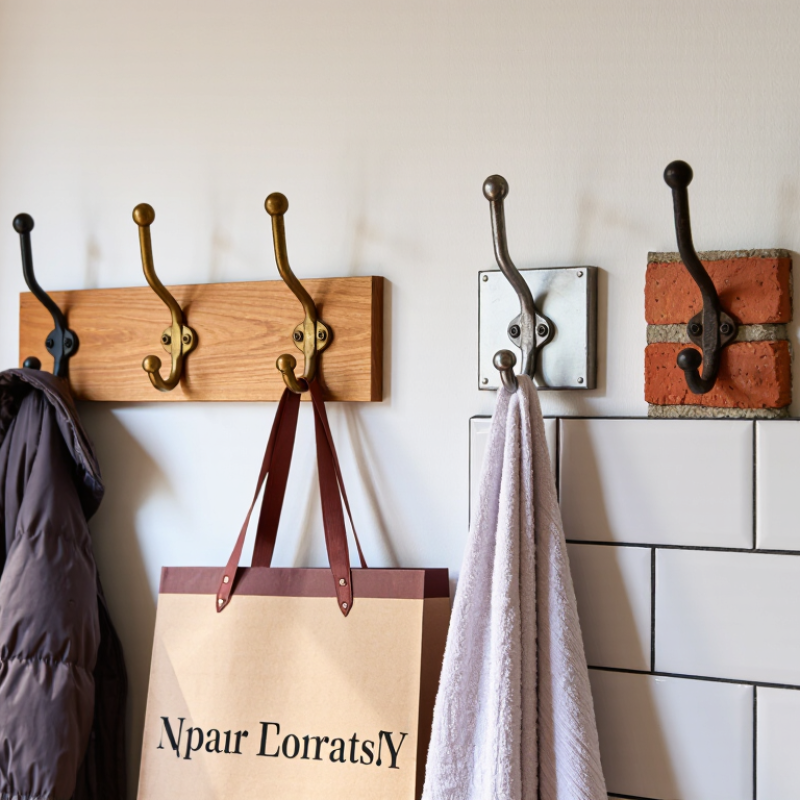
Style still matters. Matte black hooks suit modern cabinets, while brass can warm a narrow hallway. Spacing should leave fingers clear and prevent coats from colliding. I have seen attractive hooks installed too close together. They looked efficient, but felt frustrating every morning. That mistake is easy to repeat.

The best hanging hooks balance capacity, surface compatibility, comfort, and appearance. Check the wall first. Then choose the hardware.
How to Choose the Right Hanging Hooks for Any Space

Define the Space, Surface, and Purpose Before Choosing a Hanging Hook

How to Choose the Right Hanging Hooks for Any Space

Define the Space, Surface, and Purpose Before Choosing a Hanging Hook

Start with the space. A narrow entryway needs a compact hook that keeps bags away from doors and walkways. A bathroom requires corrosion-resistant materials because steam can weaken ordinary finishes. In a child’s room, rounded edges and secure mounting matter more than decorative details. Measure the available wall area first. Also check the hook’s projection, so nearby furniture does not cause repeated bumps.

Check the surface. Wood studs can usually support stronger loads than hollow drywall. Drywall may need suitable anchors, while tile requires careful drilling to prevent cracks. Painted walls can hide loose areas or previous damage. Tap the surface lightly and inspect it under bright light. I have learned that a smooth appearance does not always mean a stable mounting point. That assumption can be expensive.

Purpose changes everything. A hook for a light scarf differs from one holding a wet coat or a loaded tool bag. Compare the expected weight with the hook’s rated capacity, and leave a safety margin. Distribute heavy items across multiple hooks when practical. Adhesive options may work on clean, smooth surfaces, but dust, humidity, and textured paint can reduce their grip. Test placement with removable tape before drilling. It feels slower, yet it often prevents crooked holes and regrettable repairs.

Match Hook Types to Object Weight, Size, and Frequency of Use

Choosing a hanging hook starts with the object, not the wall. My first instinct is often to choose the smallest, neatest hook. That shortcut is unreliable. A framed print under 1 kilogram may suit a light adhesive hook. A heavy mirror, tool, or loaded bag needs a screw-mounted hook and a suitable wall anchor. Check the stated working load, not the dramatic failure load. Leave a safety margin of at least 25 percent.

Size also matters. A narrow hook can press against a strap or concentrate stress on one point. Wider objects need broader support or two hooks. Match the hook depth to the item’s thickness. For daily-use items, choose durable metal and mechanical fixing. Repeated pulling gradually challenges weak adhesive bonds. Low-use decorations can use simpler systems, provided the surface is clean, dry, and suitable. National Safety Council’s Injury Facts 2024 recorded 46,653 unintentional fall deaths in the United States during 2022. The figure is not hook-specific, but it reinforces the value of secure storage above walking areas.

Tips: Weigh the object, including its contents. Test the wall with a stud finder. For masonry, use a masonry-rated anchor. Avoid hanging sharp or heavy objects above beds and seats. Press the item gently after installation, then inspect it weekly during the first month. I still recheck hooks after seasonal changes; humidity can expose mistakes that looked acceptable on installation day. Source: National Safety Council, Injury Facts 2024.

How to Choose the Right Hanging Hooks for Any Space - Match Hook Types to Object Weight, Size, and Frequency of Use

Hook Type Typical Load Range Suitable Object Size Best Surface or Installation Recommended Frequency of Use Suitable Objects Key Selection Consideration
Adhesive Utility Hook Up to 2 kg / 4.4 lb Small to medium items; shallow or lightweight profiles Smooth, clean, dry surfaces such as painted walls, glass, tile, and metal Occasional to regular use Keys, lightweight towels, small tools, cables, and decorative accessories Allow the adhesive to set according to the manufacturer’s instructions. Avoid textured, damp, dusty, or freshly painted surfaces.
Screw-In Single Utility Hook Approximately 5–15 kg / 11–33 lb Small to medium items with a concentrated hanging point Wood studs, solid wood, or a suitable wall anchor in masonry or drywall Regular and frequent use Hand tools, bags, cords, kitchen utensils, and compact equipment Choose screws and anchors for the wall material. A structural fixing is more reliable than relying on surface trim or thin paneling.
Double Utility Hook Approximately 8–20 kg / 18–44 lb Medium items or two lighter items distributed across two arms Studs, solid wood, masonry, or properly installed wall anchors Regular use Coats, bags, garden tools, cleaning equipment, and small storage baskets Use both arms only when the load is balanced. Keep the center of gravity close to the wall to reduce leverage.
Picture-Hanging Hook Approximately 2–15 kg / 4.4–33 lb Flat, medium-size frames and wall art Drywall, plaster, or wood; select the fixing according to the wall type Infrequent handling Framed artwork, mirrors with hanging wire, and wall décor Use two hooks for wide or heavy frames when recommended. Check the hanging wire, D-rings, and frame joints as well as the wall hook.
Ceiling Screw Hook Approximately 5–25 kg / 11–55 lb Small to medium suspended objects Ceiling joists, beams, or rated anchors designed for overhead loads Regular use when securely installed Hanging plants, light fixtures, baskets, and suspended organizers Overhead loads require extra caution. Fix directly into structural material whenever possible and prevent swinging or impact loading.
Heavy-Duty Storage Hook Approximately 15–45 kg / 33–99 lb Large, bulky, or long objects Wall studs, ceiling joists, masonry, or a properly rated rail system Frequent use and long-term storage Bicycles, ladders, hoses, power equipment, and large storage items Verify the combined weight, hook projection, and wall structure. Padding may help protect painted surfaces and equipment.
Pegboard Hook Approximately 1–7 kg / 2.2–15.4 lb per hook Small to medium tools arranged on a pegboard Compatible pegboard panel securely fixed to studs or a suitable backing Frequent access Screwdrivers, pliers, brushes, measuring tools, and craft supplies Distribute weight across multiple hooks and avoid exceeding the capacity of the pegboard panel or its mounting hardware.
Over-the-Door Hook Approximately 3–10 kg / 6.6–22 lb Light to medium items; limited by door clearance Standard interior doors with suitable thickness and clearance Regular use Robes, scarves, handbags, towels, and lightweight clothing Confirm the hook fits the door gap without preventing closure. Avoid overloading, which can stress hinges and distort the door.
Rail or Track Hook Approximately 5–30 kg / 11–66 lb per hook Medium to large items that benefit from adjustable positioning Wall-mounted rail fixed into studs, masonry, or rated anchors Frequent reorganization and daily use Garage tools, kitchen utensils, coats, sports equipment, and storage containers The rail’s total capacity may be lower than the sum of individual hook capacities. Check spacing, rail fasteners, and load distribution.
Spring Clip or Clamp Hook Up to 1–3 kg / 2.2–6.6 lb Small, lightweight, or frequently changed items Shelves, rods, wire grids, or other compatible edges Very frequent handling Photos, notes, lightweight textiles, accessories, and temporary displays Choose a clamp with a secure grip and adequate jaw opening. It is not intended for heavy or high-impact loads.

Safety note: Load ranges are general planning values, not universal ratings. Always follow the hook manufacturer’s stated capacity, use the correct hardware for the substrate, and leave a safety margin—especially for overhead, dynamic, or frequently handled loads.

Evaluate Materials, Mounting Methods, and Surface Compatibility

Choosing hanging hooks starts with the material, not the shape. Stainless steel suits humid bathrooms because it resists rust better than ordinary plated steel. Solid brass adds warmth, but it can mark pale walls over time. For heavy coats, use hooks with a thick mounting plate and tested load ratings. Decorative appearance is not proof of strength.

Mounting method matters more than many buyers expect. Stud-mounted screws provide the most reliable support for masonry or timber-backed walls. Drywall anchors work for light items, but their ratings change with wall thickness and installation quality. The U.S. Consumer Product Safety Commission reported about 22,000 tip-over injuries from furniture, televisions, and appliances during 2018–2020. Hooks are smaller, yet the lesson is similar: secure attachment prevents avoidable accidents. A 2023 ASTM International guide also stresses testing assemblies under realistic loads, not only static showroom conditions.

Tips: Check the wall first. Tap for studs, inspect for hollow areas, and avoid drilling near visible outlets or plumbing. For tile, choose a compatible anchor and use low pressure to prevent cracking. Test the hook with a gradual load, then leave it overnight. I once trusted a strong hook on weak plaster. It failed quietly. Surface compatibility deserves more attention: painted drywall may need a broad base, while glass and polished stone usually require non-drilling solutions. Even manufacturer load ratings can mislead when dust, moisture, or uneven surfaces are present.

Compare Load Ratings, Safety Features, and Long-Term Durability

Choosing hanging hooks starts with the load rating, but that number needs context. A hook rated for 20 kilograms may support less on weak drywall. Check the wall material, fixing method, and direction of the load. A swinging plant or frequently used coat rack creates more stress than a motionless picture. Leave a safety margin instead of working at the stated limit. Not just the biggest number.

Safety features deserve close attention. Look for a closed loop, secure locking gate, smooth edges, and fasteners that match the mounting surface. For heavier items, attach the hook directly to a wall stud or use an appropriate anchor. Test the installation gently before adding valuable objects. I usually pull downward first, then apply light side pressure. This simple check can reveal looseness early.

Long-term durability depends on more than thick metal. Finishes should resist rust in humid bathrooms, kitchens, and covered outdoor areas. Inspect contact points for peeling, bending, or small cracks every few months. A hook can look strong while its screw slowly loosens. I once trusted a tight-looking fitting that later shifted under repeated use. That mistake taught me to check the substrate, not only the hook. Replace any part showing deformation, corrosion, or damaged threads. A reliable choice balances verified capacity, practical safety, and resistance to years of movement.

Select the Best Hook Design for Appearance, Access, and Maintenance

A hook can look attractive and still become annoying in daily use. Choose its design according to the room, the object, and the person using it. In an entryway, a wide, rounded hook protects coats and reduces fabric snags. A slim double hook suits a narrow wall but may hide behind bulky bags. Matte finishes often conceal fingerprints better than glossy surfaces. In a bright bathroom, however, a lighter finish can make water spots easier to notice and clean.

Access matters as much as appearance. Mount frequently used hooks between waist and shoulder height for comfortable reach. Keep children’s hooks lower, but avoid placing them beside sharp corners or busy walkways. Check the hook’s load rating, not just its size. A heavy winter coat needs stronger support than a scarf. Test the position with a real bag before drilling. I once mounted hooks too close together, and sleeves overlapped constantly. The layout looked balanced, but it worked poorly.

Maintenance begins with simple surfaces and secure installation. Smooth shapes collect less dust than deep grooves or decorative cavities. In damp rooms, select corrosion-resistant hardware and inspect the mounting points occasionally. Wipe the hooks with a soft cloth and mild soap; harsh cleaners may damage the finish. Removable parts can help, but loose components may disappear during cleaning. That detail is easy to overlook. Leave enough space around each hook for wiping, repainting, or replacing a damaged fastener. A design that requires special tools for every small repair may be elegant, yet impractical.