




Choosing the right pan can make everyday cooking easier, but “non-stick” does not tell the whole story. Stainless Non Stick Cookware pairs a stainless-steel body with a coated cooking surface, combining sturdy construction with easier food release. The result can suit eggs, delicate fish, and quick weeknight meals. Still, performance depends on more than the label.
A useful comparison starts with the details: the coating type, pan thickness, handle attachment, and compatibility with your cooktop. Look for clear care instructions and specific information from the manufacturer, rather than relying on broad claims. A flat base can help the pan sit steadily on a glass cooktop, while a comfortable handle matters when lifting a full pan. Small details count.
Heat and cleaning habits also affect how long a coated surface performs well. Many pans work best over low or medium heat, but the manufacturer’s guidance should take priority. Metal utensils or abrasive pads may damage some coatings; check before using them. There is no perfect pan for every kitchen. A lightweight pan may feel easier to handle, yet heat less evenly than a heavier one. And even careful research cannot predict how a pan will feel in your hand. The sections ahead examine materials, construction, cooking needs, care, and value, so you can weigh practical evidence against your own habits.
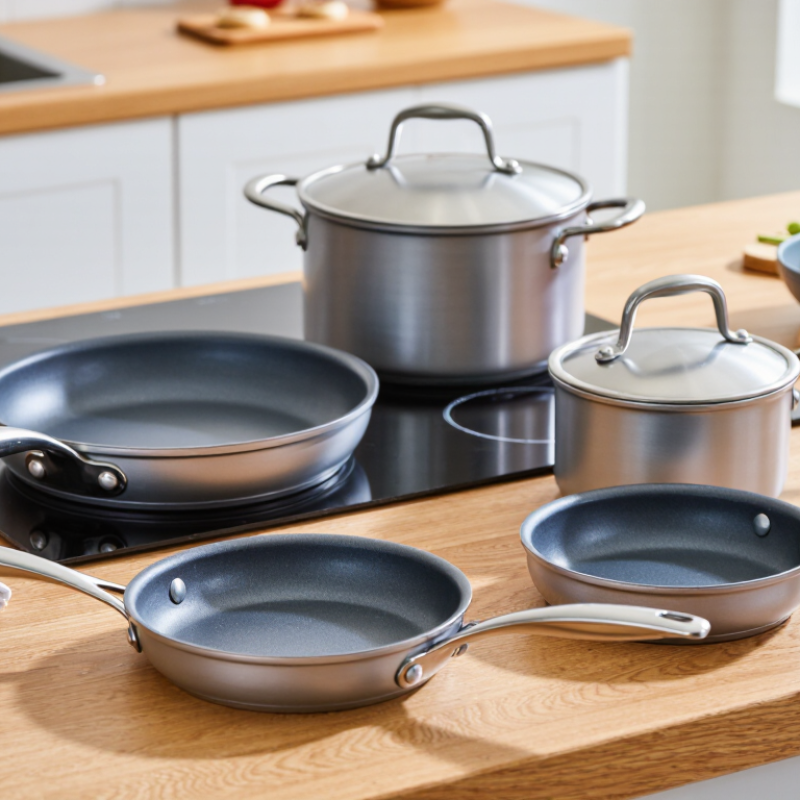
Stainless nonstick cookware combines a steel body or base with a nonstick layer on the food-facing surface. That layer matters. It is usually applied over metal, often aluminum, which spreads heat more evenly than stainless steel alone. Some pans use bonded layers: stainless steel outside, aluminum or copper inside, and a coated cooking surface. Others have an aluminum body with a stainless steel plate beneath the base for induction compatibility. Check the product’s construction details; “stainless” may describe only the exterior.
Material data helps explain the choice. The Nickel Institute’s technical data for common 304 stainless steel lists roughly 18% chromium and 8% nickel, while the International Stainless Steel Forum reported 58.4 million tonnes of global stainless steel production in 2023. These figures describe the material and its industry, not a pan’s coating quality. In use, a flat, firmly bonded base can help prevent wobbling and uneven heating. Look for clear details about the body, bonded layers, and coating care. A pan can feel sturdy and still have a thin nonstick surface. I’ve found that easy release is useful, but durability is harder to judge from a label.
Coating type affects release, care, and useful lifespan. PTFE-based coatings usually release eggs and delicate fish with little oil, making weekday cooking easier. Ceramic coatings are often chosen for their smooth feel, but their release performance can fade with heat and wear. “Ceramic” does not automatically mean tougher; that assumption is easy to make. Stainless steel underneath adds structure, but it does not protect the coating from scratches. Look for clear care instructions and a securely attached handle. Small construction details matter.
Cooking performance depends on more than the coating. A thick, even base helps reduce hot spots when browning vegetables or warming a sauce. Yet nonstick cookware is not ideal for every high-heat task; intense heat can shorten coating life. I would compare the pan’s weight, heating consistency, and cooking area against the meals you actually make. A wide pan may brown more evenly, while a lighter one is easier to lift. Neither choice is perfect.
Tips: Preheat gently, use wooden or silicone utensils, and let the pan cool before washing. Avoid abrasive pads. Check the coating regularly; if it becomes deeply scratched or begins to peel, stop using the pan. A little extra care helps, though no coating lasts forever.
Cooktop compatibility is easy to overlook when choosing stainless non-stick cookware. Check the base against your stove: induction cooktops need magnetic cookware, while gas and many electric models are more flexible. A flat, sturdy base helps keep contact even on glass-top surfaces. If possible, hold a magnet to the underside before buying. It is a quick check, not a complete quality test.
Heat control matters just as much. Non-stick surfaces generally work best over low to medium heat; high flames can overheat an empty pan and shorten its useful life. On gas, keep flames beneath the base rather than climbing around its sides. I once assumed a heavier pan would solve uneven heating, but weight alone is no guarantee. Watch how food cooks across the surface, and let the pan warm gradually.
Handle design affects daily comfort and safety. Look for a firm attachment, a shape that feels secure with a damp hand, and enough clearance from nearby burners. Handles can still become hot, especially during long cooking sessions, so use caution. Small detail. If you often move pans from stovetop to oven, check the handle’s stated heat limits; that detail is easy to miss.
Safety depends less on the steel exterior than on the cooking surface and how it is used. Check the manufacturer’s temperature limits, especially if the pan has a nonstick coating. Avoid heating it empty over high heat; preheat gently, then add oil or food. Keep the kitchen ventilated. If the coating becomes deeply scratched, flakes, or exposes the layer beneath, stop using the pan for routine cooking and consult its care guidance. Small scratches can be easy to miss. That is worth checking.
Cleaning is usually simple, but rough treatment shortens a pan’s useful life. Let it cool before washing; plunging a hot pan into cold water can warp the base. Use warm water, dish soap, and a soft sponge to loosen cooked-on residue. Skip steel wool unless the care instructions specifically allow it. Dry the pan promptly to reduce water spots, then store it without stacking heavy cookware directly on its surface. Silicone or wooden utensils help limit wear. Even careful owners make mistakes. I once left a pan soaking overnight, and the softened food came off easily, but the handle joint was harder to dry. For long-term maintenance, inspect that area and the cooking surface regularly, and follow the maker’s instructions when they differ from general advice.
| Evaluation | Uncoated Stainless Steel | PTFE-Coated Stainless Steel | Ceramic-Coated Stainless Steel |
|---|---|---|---|
| How the cooking surface works | Food cooks directly on the steel. Preheating and using enough cooking fat can help reduce sticking. | A fluoropolymer coating provides a low-stick surface over a stainless-steel body. | A sol-gel coating, often described as ceramic, provides a low-stick surface over a stainless-steel body. |
| Safety considerations | No nonstick coating to overheat or wear away. Stainless steel can release small amounts of nickel and chromium, especially during prolonged cooking of acidic food; this may matter to people with relevant sensitivities. | Use at low to medium heat and do not preheat an empty pan. Overheated PTFE coatings can release fumes that may cause flu-like symptoms in people and can be highly dangerous to pet birds. | Follow the maker’s temperature and utensil guidance. The coating can wear or chip with use; avoid using cookware with a badly damaged cooking surface. |
| Cleaning | Usually tolerates soaking and scrubbing. For stuck food, deglaze with warm water or soak before cleaning; some products are dishwasher-safe, but check their instructions. | Let the pan cool, then wash with warm water, dish soap, and a soft sponge. Abrasive pads can damage the coating. Handwashing is often recommended to help preserve it. | After cooling, wash gently with warm water, dish soap, and a non-abrasive sponge. Abrasive cleaners can wear the coating; check whether the cookware is dishwasher-safe. |
| Utensils and cooking habits | Metal utensils are generally suitable for the cooking surface, though they may scratch or mark it. | Use wood, silicone, or other utensils approved by the maker. Avoid sharp tools and cutting food in the pan. | Use non-abrasive utensils recommended by the maker. Avoid sharp tools and sudden temperature changes. |
| Long-term maintenance | Inspect the base and handles periodically. Discoloration and minor surface marks are usually cosmetic; use a cleaner intended for stainless steel if needed. | Coating life varies with heat, cleaning, and use. Replace the pan when the coating is extensively peeling, flaking, or no longer performs as intended. | Nonstick performance may decline over time, and the rate varies by product and care. Replace the pan if the coating is extensively damaged or coming away. |
| Best suited to | Searing, browning, acidic sauces, and cooks who want a durable surface without a nonstick coating. | Eggs, delicate fish, and other foods that benefit from easy release, when used within the maker’s heat limits. | Everyday low- to medium-heat cooking when easy release is a priority and the coating is maintained gently. |
| What to check before buying | Look for a stable, even base and confirm cooktop compatibility, including induction if needed. Check care instructions for the handles and lid. | Confirm the coating type, maximum temperature, oven suitability, utensil guidance, and cleaning instructions. | Confirm the stated temperature limit, oven suitability, utensil guidance, and cleaning instructions; coating performance varies among products. |
Practical takeaway: Choose uncoated stainless steel for long-term durability and high-heat cooking. Choose coated stainless steel when easy food release is more important, and follow the manufacturer’s instructions to help maintain the coating.
The best stainless non-stick set is not always the largest or most expensive. Match its features to the meals you actually cook. For eggs, pancakes, or delicate fish, a smooth non-stick interior helps food release with less oil and makes cleanup quicker. A sturdy stainless-steel body can improve heat distribution, but check the base thickness and handle comfort in person if possible. Small details matter.
Your cooktop should guide the budget. For induction, look for a magnetic base; a simple magnet test can help confirm compatibility. The U.S. Department of Energy reports that induction cooking is about 5–10% more efficient than conventional electric resistance cooking and roughly three times as efficient as gas. That may matter if you cook often, though it will not make every induction-ready pan worth its price. Check the manufacturer’s care instructions, too: a pan labeled oven-safe may still have a temperature limit.
Spend more where you’ll feel the difference: a stable base, secure handles, and a useful range of pan sizes. A small skillet for one egg can be more practical than another oversized pot. I’ve found that even good non-stick surfaces need gentle utensils and careful heat; “durable” does not mean permanent. One honest compromise: a lower-cost set may suit occasional cooking, while frequent cooks may prefer replacing individual pans as they wear.