




Choosing among China’s top ten EU Market Compliant Bedding suppliers requires more than comparing prices and product photographs. European buyers must examine fiber composition, filling safety, colorfastness, labeling, packaging, and traceable quality records. REACH obligations matter. So do GPSR readiness, textile labeling rules, and documented chemical testing.
The European Commission’s EU Strategy for Sustainable and Circular Textiles identifies textiles as a major pressure on raw materials and water. Textile Exchange reported that global fiber production reached 124 million tonnes in 2023. It could approach 160 million tonnes by 2030. These figures make supplier selection more demanding, especially for duvets, pillows, mattress protectors, and hotel bedding.
Durability matters most.
Frans Timmermans, former European Commission Executive Vice-President, stated, “We want to make sure that the textiles we use last longer, are recyclable and made as much as possible from recycled materials.” This principle shapes our supplier review. We consider factory experience, material transparency, test documentation, social audits, and export consistency.
Still, no supplier deserves automatic trust. A certificate may cover one fabric, not every finished product. A laboratory report may also be outdated. Buyers should request recent reports, production samples, wash-cycle evidence, and batch-control procedures.
This guide compares ten Chinese bedding suppliers against practical EU requirements. It highlights strengths, weaknesses, and questions worth asking before a purchase order. Some rankings remain imperfect because supplier data changes. That limitation deserves attention, not concealment.
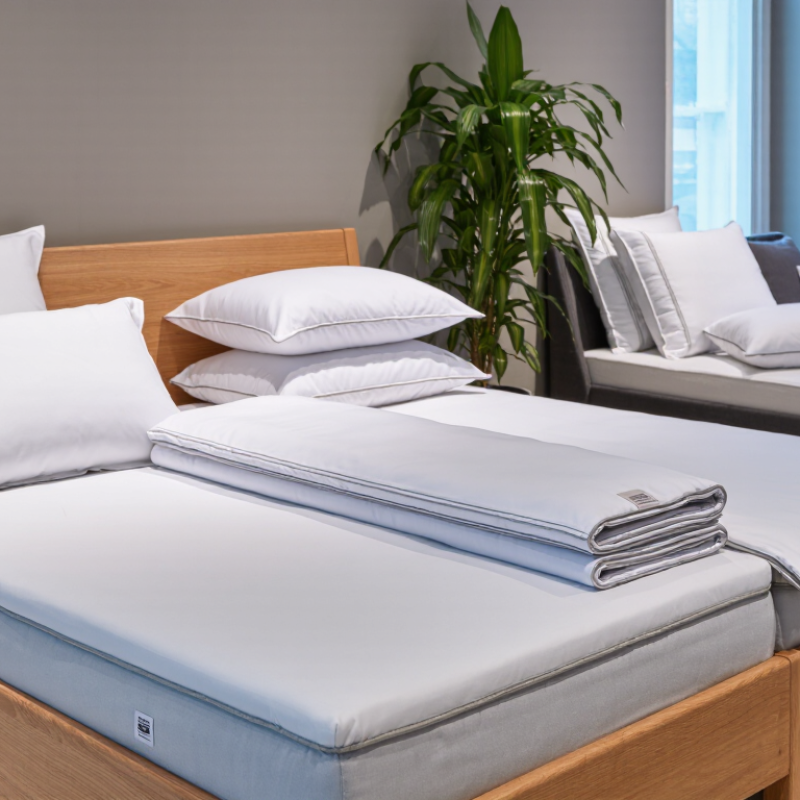
China Top 10 EU Compliant Bedding Suppliers?
EU compliance begins with product details, not a supplier’s marketing claim. Chinese bedding suppliers should identify the fiber composition, filling, dyes, coatings, and intended use. These details determine which European requirements apply. Textile labels should follow Regulation (EU) No 1007/2011. Chemical controls should address REACH restrictions, including certain azo dyes, formaldehyde, and harmful substances.
Testing must match the finished product. A duvet cover, mattress protector, and filled pillow may need different checks. Independent laboratory reports can assess colorfastness, shrinkage, seam strength, chemical content, and flammability where relevant. Ask for sample-based testing, not only factory certificates. Certificates can expire. Product specifications can also change quietly.
Traceability matters.
Reliable suppliers should provide batch records, raw-material declarations, test reports, labeling files, and corrective-action records. They should explain how failed inspections are handled. Factory experience helps, but it does not replace current evidence. During production visits, check fabric rolls, filling storage, needle control, packaging, and inspection logs. Small gaps often reveal larger process weaknesses.
There is no flawless compliance file. I would question suppliers that promise universal approval without reviewing the destination market and product category. Requirements may differ by member state, retailer, or intended user. Independent EU regulatory advice remains valuable before shipment, especially for children’s bedding or treated materials. Clear communication, repeat testing, and documented changes make supplier evaluation more dependable.
The chart maps the applicability of major EU compliance frameworks to ordinary bedding products imported from China and sold in the European Union. 100% means generally applicable, 50% means conditional, and 0% means generally not applicable to ordinary non-electrical bedding.
This is a regulatory-scope overview, not a supplier ranking. Actual obligations depend on product composition, treatments, claims, packaging, and intended use. Key references include REACH Regulation (EC) No 1907/2006, the General Product Safety Regulation (EU) 2023/988, Textile Fibre Regulation (EU) No 1007/2011, the POPs Regulation (EU) 2019/1021, and the Biocidal Products Regulation (EU) No 528/2012.
To select the top ten EU-compliant bedding suppliers, we used an evidence-based review process. We examined production experience, material knowledge, factory controls, and export records. Each supplier needed clear documentation for fabric composition, chemical testing, and product traceability. We checked testing against relevant EU requirements, including REACH obligations and textile fibre labeling rules. Compliance was treated as ongoing evidence, not a permanent label.
We requested recent reports from independent laboratories, preferably those operating under ISO/IEC 17025 accreditation. Samples were inspected for stitching, filling distribution, shrinkage, colourfastness, and odour. We also reviewed product specifications, packaging details, and care labels. Small defects mattered. A loose seam can reveal weak final inspection procedures. Communication was tested through technical questions and sample revisions.
Factory capability also influenced the ranking. We compared quality-control checkpoints, batch records, corrective-action procedures, minimum order quantities, and production flexibility. Suppliers with transparent records scored higher than those offering impressive claims without supporting documents. We considered responsiveness, too. Delayed answers can create compliance risks later. However, this method has limits. Documents may change, factory conditions may vary, and one sample cannot represent every shipment. For that reason, the list should support further audits, fresh testing, and periodic review.
China’s leading EU-compliant bedding suppliers differ in production strengths and quality controls. Supplier 1 focuses on cotton duvet covers and maintains batch-based fabric records. Supplier 2 produces hotel-grade sheets with stable sizing after repeated washing. Supplier 3 specializes in bamboo-blend bedding and checks fiber composition before export. Supplier 4 offers down-alternative quilts with documented filling weights. Supplier 5 serves private-label projects and supports packaging adjustments for European markets.
Supplier 6 manufactures children’s bedding and applies stricter checks to dyes, prints, and loose components. Supplier 7 supplies mattress protectors with water-resistant finishes and chemical test reports. Supplier 8 combines digital printing with colorfastness testing under controlled conditions. Supplier 9 produces linen bedding and records shrinkage results for each fabric batch. Supplier 10 handles small and medium orders, making it useful for new importers.
Reliable suppliers should provide recent laboratory reports, material declarations, and traceable production records. Relevant checks may include REACH chemical restrictions, EU textile fiber labeling rules, colorfastness, formaldehyde, and dimensional stability. Product safety depends on the finished item, not only the fabric certificate. That detail is often missed. Buyers should also compare test methods, sample results, and factory inspection findings. A supplier may appear experienced yet offer incomplete documentation. Verification remains necessary. Even careful factories can show uneven stitching, incorrect labels, or unexpected shrinkage in early samples. Clear specifications and independent testing reduce these practical risks.
China’s top EU-compliant bedding suppliers should be compared through evidence, not catalog claims. Textile Exchange’s 2024 Materials Market Report estimates global fiber production reached 124 million tonnes in 2023. This scale increases supply options, but also complicates traceability. Ask for recent test reports covering restricted substances, colorfastness, shrinkage, and seam strength. Relevant documentation may include OEKO-TEX Standard 100, GOTS, ISO 9001, and valid transaction certificates.
Product comparison should examine fabric weight, yarn count, filling recovery, stitching density, and wash performance. A 300-thread-count label alone proves little. Down-alternative quilts need filling composition and migration results. Factories should disclose monthly output, peak-season capacity, quality-control staffing, and lead times. Production figures deserve verification through audit records and sample orders. Capacity is not the same as consistency.
Pricing needs a transparent worksheet. Compare the same fabric, dimensions, filling weight, packaging, inspection standard, and Incoterm. A lower quote may hide weaker fabric, higher minimum orders, or excluded testing fees. Request three comparable quotations, then separate material, labor, packaging, certification, and freight costs. Textile Exchange reports continued growth in recycled and preferred fibers, yet these materials can carry higher processing costs. I would not treat the cheapest offer as the best value. My own comparison method still has a weakness: seasonal cotton prices and exchange rates can quickly distort a careful estimate.
| Supplier Profile | Primary Bedding Products | Typical Materials | EU-Relevant Compliance Documentation | Indicative Monthly Capacity | Typical MOQ | Indicative FOB Price Range | Key Strength |
|---|---|---|---|---|---|---|---|
| Supplier 01 | Quilts, comforters, duvet inserts, mattress toppers | Polyester microfiber, cotton, recycled polyester, down-alternative fill | OEKO-TEX® Standard 100 ISO 9001 REACH declarations BSCI audit available | 80,000–120,000 pieces | 300–500 pieces per style | US$8–32 per piece | Large-volume private-label production and automated quilting |
| Supplier 02 | Bed linen sets, fitted sheets, pillowcases, duvet covers | 100% cotton, cotton percale, cotton sateen, linen blends | OEKO-TEX® Standard 100 GOTS options ISO 9001 REACH declarations | 100,000–180,000 sets | 500–1,000 sets per design | US$6–28 per set | Wide fabric and color selection with strong home-textile finishing |
| Supplier 03 | Down and feather duvets, pillows, hotel bedding | Down, feather, cotton cambric, down-proof polyester | RDS documentation OEKO-TEX® Standard 100 Down pass testing REACH declarations | 35,000–70,000 pieces | 200–400 pieces per specification | US$22–95 per piece | Specialized filling, washing, sorting, and down-proof construction |
| Supplier 04 | Weighted blankets, sensory blankets, therapeutic bedding | Glass-bead fill, cotton, polyester, bamboo viscose blends | OEKO-TEX® Standard 100 ISO 9001 REACH declarations Product safety test reports | 40,000–90,000 pieces | 300–500 pieces per color | US$12–42 per piece | Flexible weight options and reinforced compartment stitching |
| Supplier 05 | Organic cotton bedding, baby bedding, nursery sets | Organic cotton, GOTS-certified cotton, recycled polyester filling | GOTS scope certificate OEKO-TEX® Standard 100 GRS options REACH declarations | 25,000–55,000 sets | 200–400 sets per design | US$10–38 per set | Organic-material traceability and small-batch development |
| Supplier 06 | Mattress protectors, encasements, waterproof sheets | Polyester jersey, TPU membrane, cotton terry, recycled polyester | OEKO-TEX® Standard 100 ISO 9001 REACH declarations Waterproof performance reports | 90,000–160,000 pieces | 500–1,000 pieces per size | US$4–18 per piece | High-speed sewing, elastic installation, and waterproof lamination |
| Supplier 07 | Hotel duvets, pillows, mattress pads, hospitality linen | Polyester hollow fiber, cotton, cotton-polyester blends | OEKO-TEX® Standard 100 ISO 9001 BSCI audit available REACH declarations | 120,000–220,000 pieces | 500–1,000 pieces per specification | US$5–26 per piece | Commercial durability, repeat orders, and institutional packaging |
| Supplier 08 | Knitted blankets, throws, bed runners, decorative cushions | Acrylic, cotton, recycled polyester, wool blends | OEKO-TEX® Standard 100 GRS options ISO 9001 REACH declarations | 45,000–85,000 pieces | 300–600 pieces per pattern | US$7–30 per piece | Jacquard, knitted texture, recycled yarn, and decorative customization |
| Supplier 09 | Silk duvets, silk pillows, premium bedding sets | Mulberry silk, cotton sateen, silk-filled fabric shells | OEKO-TEX® Standard 100 ISO 9001 REACH declarations Material composition testing | 15,000–35,000 pieces | 100–300 pieces per specification | US$28–120 per piece | Premium natural-fiber products and lower-volume customization |
| Supplier 10 | Recycled bedding, eco quilts, recycled-fiber pillows | GRS recycled polyester, recycled cotton, recycled microfiber | GRS scope certificate OEKO-TEX® Standard 100 ISO 14001 options REACH declarations | 50,000–100,000 pieces | 300–500 pieces per style | US$9–36 per piece | Recycled-content claims, traceability, and sustainability reporting |
Choosing among China’s top ten EU-compliant bedding suppliers requires more than comparing prices. A supplier should provide recent test reports for fabric composition, colourfastness, shrinkage, flammability, and restricted substances. Ask whether testing covers the exact production batch, not merely a similar sample. EU requirements can involve REACH, textile fibre labelling, product safety, and country-specific packaging rules. Confirm the details with a qualified compliance adviser.
Visit the factory, physically or through a documented audit. Inspect stitching, filling distribution, seam strength, zippers, and carton protection. A 300-thread-count label means little if the fabric shrinks after washing. Request a pre-production sample and wash it at least five times. Measure its size, weight, smell, and surface condition. Small defects often reveal weak quality controls.
Reliable suppliers should identify fibre origins, maintain batch records, and explain their corrective-action process. Ask how they handle failed inspections. Their answer matters more than a polished catalogue. I once found excellent laboratory results paired with inconsistent sewing on later samples. That gap changed the purchasing decision. No audit is perfect. Keep written specifications, approved samples, inspection tolerances, and delivery penalties in the contract. Check communication speed too. Delayed answers can become delayed shipments. A practical shortlist should balance verified compliance, production experience, transparent documentation, stable quality, and realistic lead times for the European market.