





Top Earth Bar Manufacturers for Global Buyers

Reliable grounding starts with components that are easy to overlook. An Earth Bar provides a defined connection point for protective conductors, equipment bonds, and grounding networks. Its material, dimensions, hole pattern, finish, and installation environment all affect suitability. Small details matter. A poorly matched bar can complicate installation or maintenance, even when the surrounding system is well designed.

Demand for dependable electrical infrastructure is growing. The International Energy Agency’s World Energy Investment 2024 report says annual grid investment, at about USD 400 billion, needs to rise by around 50% by 2030. This is not an Earth Bar market forecast. It does, however, show why buyers should assess grounding components as part of broader infrastructure projects. For global procurement teams, useful checks include material certificates, dimensional drawings, corrosion-resistance details, production traceability, and evidence of relevant testing. Ask how custom drilling or plating is controlled, too.

This guide examines Earth Bar manufacturers for global buyers, with attention to product range, manufacturing capability, quality documentation, and export support. Standards and project specifications vary, so one supplier’s catalog description is not enough. Verify requirements with the project engineer and request current technical documents before ordering. A polished website is not proof of consistent production. And supplier comparisons can miss practical issues, such as packaging damage or unclear lead times. Those details deserve scrutiny.
Top Earth Bar Manufacturers for Global Buyers

Understanding Earth Bars and Their Role in Electrical Grounding

An earth bar is a conductive connection point for protective conductors and bonding wires. It is commonly mounted inside a distribution board or a metal enclosure. In a grounding system, it helps keep exposed conductive parts connected to the intended earth path. During a fault, that path must carry current so protective devices can operate. The bar does not “remove” danger by itself. Connections, conductor sizing, and the wider installation matter just as much. Small component. Serious role.

Copper and tinned copper are common materials, while insulated supports can separate the bar from its enclosure when the design requires it. Look for clear terminal markings, secure mounting, and enough connection points for the specified conductors. A neat row of wires is not proof of a sound installation. Loose screws, corrosion, or incompatible metals can undermine continuity over time. Not obvious at a glance. Qualified installers should verify the design, tighten connections to the specified torque, and test continuity. Earth and neutral bars may look similar, but they serve different functions and should not be interchanged unless the system design explicitly calls for a connection. Even careful work deserves a second check.

Key Materials, Designs, and Standards for Earth Bars

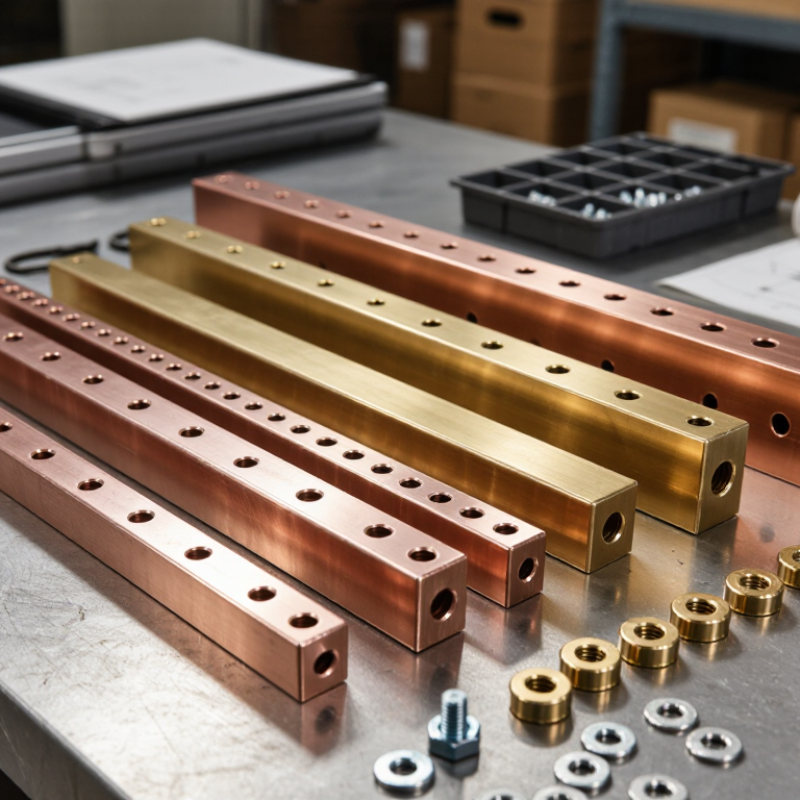
Earth bars are commonly made from high-conductivity copper, chosen for its reliable electrical performance and practical machinability. In damp or corrosive locations, tin-plated copper can help limit surface oxidation. Coating does not fix every problem. Contact faces still need clean, compatible connections. Stainless steel may suit certain supports or fittings, but it is not a direct substitute for copper in every current-carrying application.

Design should match the installation, not just the available cabinet space. A bar may have drilled terminals, removable links, protective covers, or insulated standoffs. Hole spacing must fit the conductors and lugs without forcing bends. Check cross-section, fault-current withstand, temperature rise, and mechanical support against the project requirements. Small details matter.

Standards depend on use and location. IEC 60364 provides installation guidance, while lightning-protection components may require assessment against relevant IEC 62561 provisions. Applicable national rules and project specifications should also be checked. Ask suppliers for material details, dimensional drawings, and suitable test documentation. A polished finish can look reassuring, but appearance alone proves little. I would also review how the bar will be inspected and retightened after installation; that step is easy to overlook.

Leading Earth Bar Manufacturers Serving Global Markets

Leading Earth Bar Manufacturers Serving Global Markets

Global buyers need earth bars that match local drawings, fault-current requirements, and installation conditions. The IEA’s 2023 report, Electricity Grids and Secure Energy Transitions, says annual grid investment must exceed USD 600 billion by 2030 to meet transition needs. That outlook reinforces demand for dependable electrical infrastructure, including correctly specified grounding components. But a forecast is not a purchase order.

The IEA’s 2023 report, Electricity Grids and Secure Energy Transitions, says annual grid investment must exceed USD 600 billion by 2030 to meet transition needs.

Experienced manufacturers should provide clear material specifications, dimensional drawings, and inspection records. Buyers can verify copper grade, bar thickness, hole spacing, plating, and marked batch traceability before shipment. Ask how the supplier controls flatness and coating consistency; these details matter when a bar must sit flush inside a crowded switchboard. Review sample test reports, too. A polished brochure alone proves little. Export experience helps, but packaging and communication can still fall short.

Tips: Send the mounting drawing and site environment with your inquiry. Confirm tolerances, finish, and test documentation in writing. For outdoor or corrosive locations, discuss suitable protection before production. One small mismatch can delay installation.

How to Compare Earth Bar Manufacturers and Product Offerings

Earth bars look simple, but small differences can affect installation and long-term reliability. Compare copper grade, plating, dimensions, hole spacing, and mounting options against the project drawings. A bar that is only a few millimeters too thick may not fit an enclosure or accept existing terminals.

Ask each manufacturer for rated current, short-circuit withstand data, material specifications, and inspection records. Check that test evidence matches the exact product configuration, not merely a similar model. For outdoor or humid sites, confirm the finish suits the environment and ask how contact surfaces are protected. Clear traceability and consistent machining are useful signals, though paperwork alone cannot prove workmanship. Look closely at sample edges and drilled holes.

Tips: Send suppliers the same drawing and operating conditions. Compare quoted tolerances, lead times, packaging, and customization fees—not just unit price. Request a sample if fit is critical. One detail is easy to miss: protective coatings can affect electrical contact, so confirm which surfaces remain conductive.

A reliable comparison also considers communication. Does the supplier flag unclear specifications, or simply quote a price? That difference matters when dimensions, connections, or delivery dates change. Some buyers focus too heavily on the lowest offer; it is understandable, but rework can erase the savings.

Factors Global Buyers Should Consider When Selecting a Supplier

For global buyers, an earth bar is only as dependable as its material and documentation. Specify copper grade, dimensions, hole spacing, surface finish, and required conductivity before comparing quotations. Ask for batch-specific test certificates, not only a general product sheet. Small details matter. A bar that misses a terminal spacing by a few millimetres can complicate installation.

Supply continuity deserves equal scrutiny. The USGS Mineral Commodity Summaries 2024 estimated global copper mine production at 22 million metric tons in 2023. That figure does not predict a supplier’s stock, but it reminds buyers to check material sourcing, capacity, and lead-time assumptions. Request a sample and inspect its edges, drilled holes, and finish. A polished brochure is not proof.

Also assess quality controls, change notification, packaging, and export documents. The UNCTAD Review of Maritime Transport 2024 reported that maritime trade grew 2.4% in 2023, while shipping routes faced disruption. Ask suppliers how they protect bars from moisture and abrasion in transit, and whether they can share realistic delivery schedules. One awkward question remains: will the supplier still support replacement batches years later? Don’t assume. Compare written answers, not just unit prices.