Top 10 Eco Friendly Cosmetic Containers Wholesale Suppliers
Choosing the right supplier for Eco Friendly Cosmetic Containers Wholesale takes more than comparing unit prices. Brands must examine material sourcing, refill options, production consistency, and shipping protection. A glass serum bottle may feel premium, but its weight can increase transport emissions and breakage risk. A lightweight PCR-plastic tube may travel efficiently, yet buyers should ask how much recycled content it contains. Details matter.
Circular-economy pioneer Ellen MacArthur offers a useful guiding principle: “A circular economy is based on the principles of designing out waste and pollution, keeping products and materials in use, and regenerating natural systems.” For cosmetic packaging, that means looking beyond attractive labels. Ask suppliers for material specifications, sample units, minimum order quantities, and clear answers about recycling or refill systems. Test pumps, caps, and seals with the actual formula; a container that leaks on a warm warehouse shelf is not a sustainable choice.
This guide introduces ten wholesale suppliers and the practical differences between them. It considers product range, customization, order flexibility, and the evidence suppliers provide for their environmental claims. Some buyers may favor compostable materials; others may need durable, refillable packaging. Neither option is automatically right. “Eco-friendly” can be an imprecise promise, and this comparison cannot replace independent supplier checks. Use the shortlist to ask sharper questions, request samples, and match packaging to real product needs.
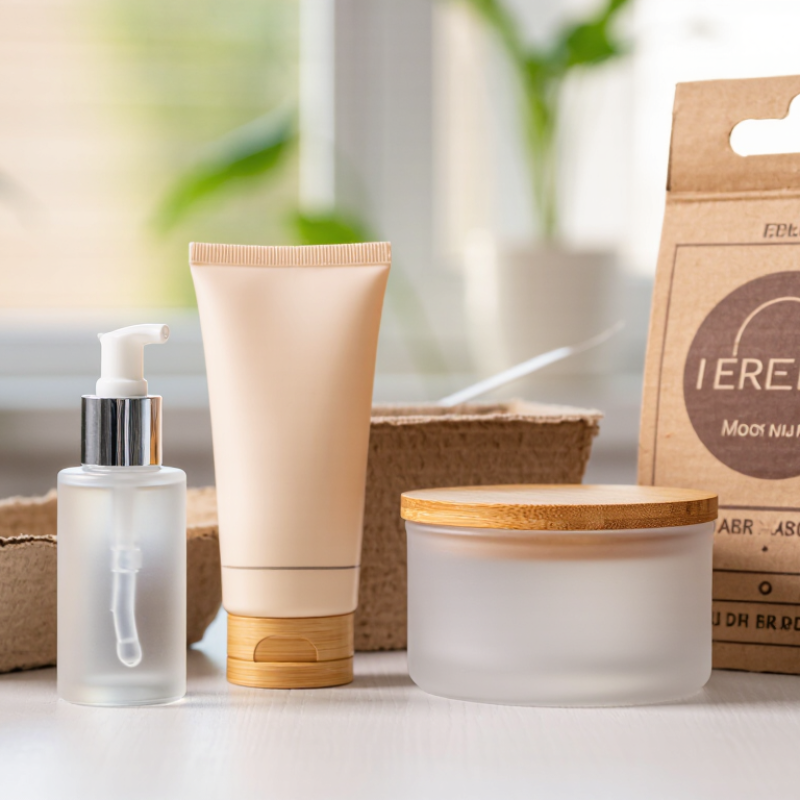
What Defines an Eco-Friendly Cosmetic Container?
An eco-friendly cosmetic container is not defined by a green tint or a leaf printed on its label. Its impact depends on the materials used, how much packaging is needed, and what happens after the product is finished.
A lightweight jar made with recycled material may reduce demand for virgin plastic, but only if the material suits the formula and protects it from air, light, and leaks. Practical details matter. A pump that leaves a thick layer of cream trapped inside can waste product.
Look closely at whether parts can be separated easily, such as a glass jar, plastic lid, and metal spring. Complicated mixtures may be harder to sort through local recycling systems.
Refillable designs can cut packaging use over time, though customers need convenient refills and durable containers to make the option worthwhile. Not always. “Recyclable” does not mean every collection program accepts the item.
Suppliers should provide clear material specifications and explain recycled content, refill options, and disposal guidance. A sample test helps: fill the container, ship it, open it repeatedly, and check for cracks or residue.
Some choices involve trade-offs, and a package that looks less perfect may perform better with less material.
Common Sustainable Materials and Container Formats
Common Sustainable Materials and Container Formats
Eco-friendly cosmetic containers often use recycled glass, recycled plastic, aluminum, or paper-based materials. Each has different handling and transport needs. Glass feels sturdy and protects many formulas, but it is heavy and can break in transit. Aluminum is lightweight and blocks light, though inner coatings may affect compatibility. Recycled plastic can reduce demand for virgin material, but color and quality may vary between batches. There is no perfect option. A material’s real value depends on how it is made, shipped, used, and recovered.
Wholesale formats include jars for creams, bottles for lotions, tubes for cleansers, and airless pumps for formulas that need limited exposure. Refillable designs can cut container waste when customers actually reuse them. That detail is easy to overlook. Ask suppliers for material specifications, sample units, minimum order quantities, and details about closures and liners. Test samples with your formula; a container that looks suitable may leak, clog, or change the product’s appearance.
Tips: Match the format to the formula and how customers use it. Check labels, pumps, and caps as well as the main container. Request samples and run a small filling test before placing a large order. Small flaws can become expensive at scale.
EU 2030 Minimum Recycled Content Targets for Plastic Packaging
The EU Packaging and Packaging Waste Regulation sets these minimum recycled-content targets for plastic packaging from 2030. Cosmetic containers may fall into different categories depending on their material and use; check applicable requirements for each package.
Source: Regulation (EU) 2025/40, Article 7. Targets shown are regulatory minimums, not measures of overall environmental impact.
How to Evaluate Wholesale Cosmetic Packaging Suppliers
When evaluating wholesale cosmetic packaging suppliers, look beyond the word “eco-friendly.” Ask what each container is made from, including its cap, pump, liner, and label. Request written details on recycled content and material sourcing. Ask for proof. Terms such as “biodegradable” can be vague, and disposal options differ by location. A clear supplier should explain the material’s limits, not just its benefits.
Order samples before discussing a large purchase. Fill jars and bottles with your actual formula, then check for leaks, discoloration, odor changes, and dispensing problems. Test the packaging during shipping, too; a cracked lid can undo careful material choices. Request specifications and quality records for the sample and production order. Small differences between batches matter.
Compare minimum order quantities, lead times, shipping protection, and replacement policies in writing. Ask how the supplier handles material changes or delays, and whether it can provide advance notice. A responsive contact is useful, but polished emails do not prove consistent quality. One detail buyers may overlook is decoration: coatings and labels can complicate recycling. Verify compatibility for your chosen container instead of assuming every component shares the same disposal route.
Profiles of 10 Eco-Friendly Cosmetic Container Suppliers
Eco-friendly cosmetic container suppliers differ in materials, minimum orders, and finishing options. A glass specialist may offer clear or amber jars with thick bases, though shipping weight can raise costs.
A recycled-plastic supplier can provide PCR bottles; ask for material percentages and color consistency across batches. An aluminum-packaging maker suits lightweight tins and tubes, but test compatibility with the formula before ordering.
An airless-pump supplier can help reduce product exposure and leftover residue. Check whether the pump dispenses evenly near the end. A refillable-packaging supplier may offer jars with replaceable inner cups, while a paper-container producer can supply cartons and molded-fiber parts. Paper alone may not protect every formula from moisture.
A small-batch supplier is useful for testing, but unit prices can be higher. That trade-off matters.
A custom-mold supplier can shape distinctive containers, yet tooling costs and lead times deserve close review. A regional stock-packaging supplier may ship standard bottles faster, although customization is limited.
A multi-material supplier can coordinate caps, bottles, and pumps in one order, but request samples from the actual production line.
For each of these ten supplier profiles, compare technical documents, sample quality, order quantities, and delivery terms. Look closely at seams, cap fit, and label adhesion.
One sample is not enough. Batch variation still needs checking.
Key Factors in Selecting a Wholesale Supplier
A dependable wholesale supplier should explain what each cosmetic container is made from, not rely on broad claims like “eco-friendly.” Ask for material specifications, recycled-content details, and any available third-party documentation. Clear answers help you compare glass, aluminum, and plastic options without assuming one material suits every product. Details matter.
Check whether the container works with your formula and filling process. Request samples, then test the pump, cap, seal, and label on a filled unit. Leave it upright and on its side for several days. A small leak can create costly returns. Confirm that the supplier can provide consistent dimensions and closures across repeat orders.
Review minimum order quantities, production lead times, and shipping terms before comparing unit prices. Ask how damaged goods are handled and whether replacement parts are available. A low quote may exclude protective cartons or custom components. Also consider whether the supplier can share realistic delivery updates during busy periods. Communication is easy to overlook until a shipment is late. No supplier can promise every detail will go perfectly, so record agreed specifications and inspect a production sample before approving a larger order.