





The worldwide market for cosmetic ingredients includes suppliers with different production scales, documentation practices, and service models. Kojic Acid Dipalmitate Powder is used in cosmetic formulations, but product suitability depends on more than a supplier’s website description. Buyers should compare identity specifications, purity data, appearance, packaging, and recommended storage conditions. Small details matter. A white powder in a sealed, moisture-resistant container may look reassuring, but appearance alone cannot confirm quality.
This guide introduces ten suppliers to consider and explains practical points for evaluating them. It is not a guarantee that any company is the best fit; availability, product specifications, and regional service can change. Ask for a current certificate of analysis, technical data sheet, safety data sheet, and batch traceability information. Check whether sample quantities are available and whether the supplier can answer technical questions clearly. Response time matters, too. A careful review should include shipping options, minimum order quantities, lead times, and support after purchase. These checks do not replace independent quality assessment, and supplier claims deserve verification. That caveat is easy to overlook. Use the list as a starting point, then confirm that each product matches your formulation needs and your organization’s quality procedures.
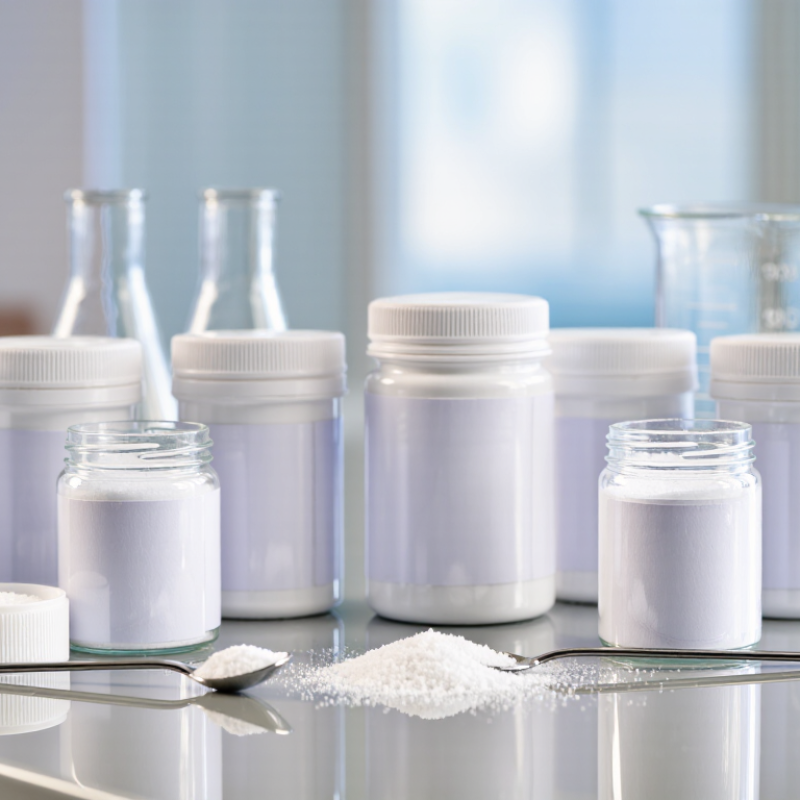
Kojic acid dipalmitate is an ester made from kojic acid and palmitic acid. It is commonly supplied as a white or off-white cosmetic powder. Unlike kojic acid, this modified form is oil-soluble, so formulators usually incorporate it into an oil phase rather than dissolve it directly in water. It is used in skin-care products designed to improve the appearance of uneven tone. The distinction matters: a powder’s identity does not guarantee its purity, stability, or performance in a finished formula. Check its specification sheet and test its behavior in the intended base.
Evidence should be read carefully. The Cosmetic Ingredient Review’s 2010 Safety Assessment of Kojic Acid as Used in Cosmetics reported cosmetic-use concentrations of 0.1% to 1% for kojic acid. That figure concerns kojic acid, not kojic acid dipalmitate, so it should not be treated as a recommended level for this ester. Formulation results can vary with particle size, processing, and storage conditions. A powder may look uniform in the jar, yet still disperse poorly. That practical gap deserves attention. Cite ingredient-specific safety and stability data when assessing a supplier’s material.
The global kojic acid dipalmitate powder market is better understood as a supply chain than a ranked list. Upstream producers make the ingredient, while regional distributors manage smaller orders, documentation, and delivery. Formulators and contract manufacturers then assess it for specific products. Public reports rarely isolate kojic acid dipalmitate, so a precise worldwide supplier count is difficult to verify.
Demand sits within a much larger personal-care economy. Cosmetics Europe reported European cosmetics and personal-care retail sales of €96 billion in 2023. That figure does not measure kojic acid dipalmitate sales; it shows the scale of the downstream market. Buyers often compare assay, residual starting material, moisture, color, particle size, and batch traceability. A sample may look fine in a jar, yet behave differently after blending into an oil-based formula.
Supplier selection also depends on service, not just price. A local distributor may offer quicker delivery and smaller minimum orders, while a direct producer may provide clearer batch records or technical support. Ask for current specifications, safety documentation, and a representative certificate of analysis. Check consistency across more than one batch. That detail matters. These checks do not guarantee performance, and supplier directories can be incomplete or outdated. Cite: Cosmetics Europe, The European Cosmetics Industry: Market Performance 2023.
A practical map of ten common supplier channels for sourcing kojic acid dipalmitate (KAD). These entries describe market roles and sourcing routes, not a ranked list of companies.
| No. | Supplier Type | Typical Market Footprint | Role in the Supply Chain | What Buyers Should Verify | Often Suited To |
|---|---|---|---|---|---|
| 1 | Direct ingredient manufacturers | Manufacturing hubs in Asia, with exports to international markets | Sell material produced at their own facility, subject to product and export availability. | Manufacturing-site identity, batch-specific certificate of analysis (COA), specification, traceability, and export documentation. | Buyers seeking direct technical discussions or recurring commercial-volume supply. |
| 2 | Specialty cosmetic-ingredient manufacturers | Regional and international; may serve several personal-care markets | Supply cosmetic ingredients and may provide formulation or application guidance. | Whether KAD is manufactured in-house or sourced from another producer; product grade and supporting documents. | Formulators needing technical support alongside ingredient sourcing. |
| 3 | Contract and toll manufacturers | Available in established chemical and cosmetic manufacturing regions | Produce or process material under contract; capabilities depend on the facility and agreement. | Process scope, quality-system documentation, audit access, change-control terms, and responsibility for release testing. | Buyers with defined specifications, private procurement arrangements, or production-planning needs. |
| 4 | Specialty chemical distributors | Regional distribution networks across North America, Europe, and Asia-Pacific | Aggregate products from one or more producers and support local sales and logistics. | Original source, authorized supply status where applicable, lot traceability, storage conditions, and document availability. | Buyers prioritizing local service, consolidated purchasing, or regional delivery. |
| 5 | Cosmetic-ingredient distributors | Local and regional markets worldwide | Serve personal-care formulators with ingredient sourcing and, in some cases, application support. | Whether the supplied grade is intended for cosmetic use, current technical documentation, and regional compliance support. | Small and mid-sized brands, laboratories, and product-development teams. |
| 6 | Importers and local stockists | Country-level markets, often near major ports or manufacturing centers | Import material and hold inventory for domestic or nearby customers. | Import records where relevant, storage and repacking history, lot consistency, and local-language safety documents. | Buyers needing shorter lead times or domestic invoicing and delivery. |
| 7 | Ingredient trading companies | International, often operating across several sourcing regions | Match buyer requirements with available producers or distributors; may not manufacture the product. | Actual manufacturer and country of origin, chain of custody, sample-to-bulk consistency, and written specifications. | Buyers comparing multiple sources or seeking help with cross-border procurement. |
| 8 | Online B2B sourcing platforms | Global listings with suppliers and intermediaries from multiple regions | Provide a discovery and inquiry channel; platform listings alone do not establish product quality or supplier status. | Business identity, facility details, independent document checks, representative samples, and secure payment terms. | Initial supplier discovery and quotation comparison, followed by independent qualification. |
| 9 | Formulation houses and product-development partners | Regional service markets serving cosmetic and personal-care companies | May source KAD as part of developing or manufacturing a finished formulation. | Ingredient source, ownership of the formula, ingredient disclosure, finished-product testing, and contractual responsibilities. | Teams developing a finished product rather than purchasing a raw material alone. |
| 10 | Laboratory and small-quantity suppliers | Available through specialist laboratory and research-chemical channels in some markets | Offer smaller packs for evaluation or research; commercial-scale availability may be limited. | Intended use, pack size, lot documentation, storage conditions, and whether the material is suitable for the buyer’s application. | Bench trials, feasibility work, and early-stage formulation evaluation. |
How to read this table: There is no single public, independently verified global ranking of KAD suppliers, and supplier availability changes by region. Before purchasing, confirm the actual manufacturer, batch-specific COA, safety data sheet (SDS), technical data sheet (TDS), specifications, traceability, and applicable local requirements. Check identity, assay, appearance, and other agreed quality parameters against the supplier’s specification; do not treat a listing or sample as proof of commercial-batch quality.
Worldwide supplier profiles for kojic acid dipalmitate powder are most useful when they compare manufacturing roles, not unsupported rankings. McKinsey & Company’s 2023 beauty-market report estimated annual growth of about 6 percent, with the market potentially reaching 580 billion dollars by 2027. That wider growth makes careful ingredient sourcing more important, but it does not prove demand or quality for any single powder.
Ten supplier profiles can be mapped by operating model: integrated East Asian producers; Chinese bulk-powder manufacturers; Japanese precision ester specialists; Korean personal-care ingredient exporters; Indian importers; European specialty distributors; North American technical distributors; Southeast Asian regional stockists; contract manufacturers that source ingredients; and laboratory suppliers handling smaller lots. Each profile serves a different need. Check stock location, pack size, lead time, and whether technical support is available.
Request a current, batch-specific certificate of analysis. Compare assay, moisture, particle-size range, and relevant impurity limits. Ask how the powder is stored; heat and humidity can affect handling and consistency. Check the test method, not just the stated result. A sales specification alone is thin evidence. Supplier documents should be reviewed against the intended formulation and applicable local requirements, since suitability cannot be inferred from a product name.
A product-reference comparison for readers exploring worldwide suppliers. Supplier names and supplier-specific rankings are not shown.
Molecular weights are calculated from the molecular formulas: kojic acid (C₆H₆O₄) and kojic acid dipalmitate (C₃₈H₆₆O₆). Values are in grams per mole.
A useful comparison of kojic acid dipalmitate powder suppliers starts with the specification sheet, not the sales claim. Check identity, assay, appearance, moisture, and particle-size range. A consistent fine powder should pour freely and show no visible clumps. Ask how each test is performed, and whether the method is validated for this ingredient. Small differences matter.
Request recent batch-specific certificates of analysis, not just a template. Compare reported results with agreed limits for assay, residual free kojic acid, heavy metals, and microbial quality where relevant. Ask for the safety data sheet, manufacturing-site details, change-control procedures, and traceability from raw materials to finished batch. Documentation aligned with ISO 22716 cosmetic GMP can support review, but certification alone does not prove every batch performs equally. Paperwork can still look polished while a batch varies.
Cosmetics Europe’s Market Performance 2023 report valued Europe’s cosmetics and personal care market at €96 billion in retail sales. That figure describes market scale, not ingredient quality; it helps explain why reliable sourcing and records matter. Compare suppliers on response time, sample-to-batch consistency, packaging protection, and storage guidance. Check whether the powder stays free-flowing after shipment. A neat specification is helpful. Real batch data is better.
Choosing a kojic acid dipalmitate powder supplier starts with evidence, not a polished product page. Ask for a recent certificate of analysis tied to the actual batch. Check the stated identity, assay, appearance, and test methods. The powder should match its specification in color and texture, but sight alone proves little. Details matter. Request safety data, manufacturing traceability, and clear storage guidance. A supplier that explains testing limits is often more credible than one promising flawless results.
Packaging and communication deserve equal attention. Confirm that containers are sealed, moisture-protective, and labeled with batch numbers and retest or expiry information. Ask how samples are handled and whether commercial batches can be checked against the same specifications. Compare lead times, minimum order quantities, and shipping conditions before relying on a quotation. For international purchasing, verify that required technical and safety documents are available for your intended market. An experienced quality team should answer practical questions without evasion. Still, paperwork can look complete while gaps remain; review the documents with your own technical staff, and record any unresolved questions before placing an order.