What Are the Top Types of Grocery Store Price Labels?
grocery store price labels do more than show a number. They help shoppers compare products, spot promotions, and find the right item on a crowded shelf. A small paper tag beneath a row of jars works differently from a bright sale sign or a digital display. Each format has practical strengths, and each can create confusion when prices are unclear, outdated, or poorly placed.
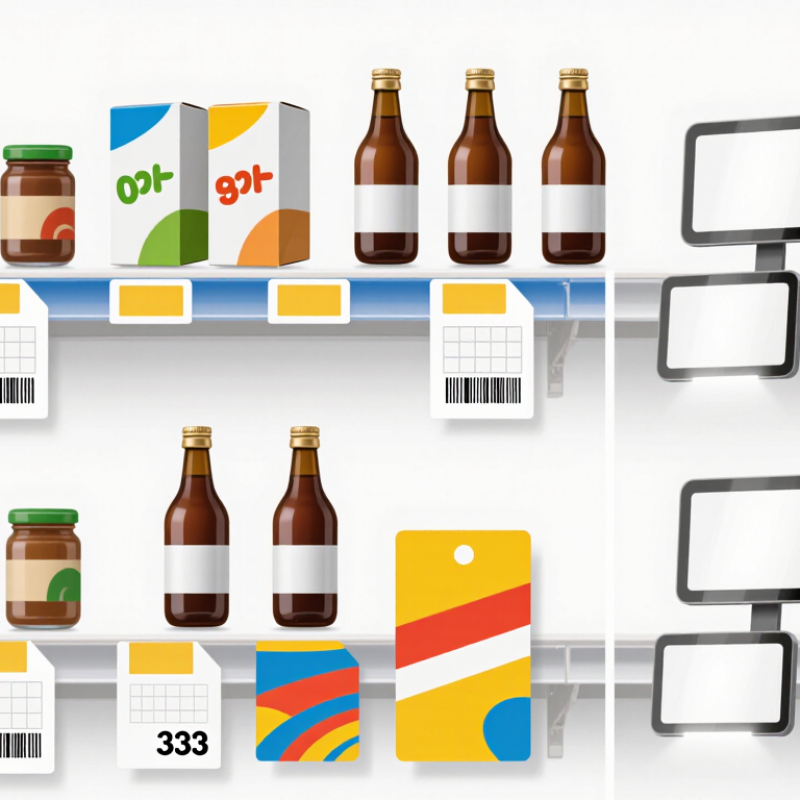
This overview explores common types, including printed shelf-edge labels, adhesive product labels, promotional signs, and electronic shelf labels. It considers where each type fits, what details shoppers need to see, and how stores can keep information consistent across shelves and checkout systems. The choice depends on the product, store layout, and frequency of price changes—not just appearance. Simple matters. A label hidden behind a cereal box is not very useful. Electronic displays may update quickly, but they still need careful setup and checking. Paper tags can be easy to replace, though busy staff may overlook a misplaced one. No format is perfect. Even a clear label can leave questions about unit pricing or a promotion’s terms. Looking closely at these trade-offs gives retailers a more grounded way to choose labels and gives shoppers a clearer view of what the shelf is actually saying.
Shelf-Edge Paper Labels: The Traditional Format for Item and Unit Prices
Shelf-edge paper labels remain a practical way to show item and unit prices directly beneath products. Shoppers can compare a 500-gram bag with a one-kilogram option without lifting either package. The U.S. Bureau of Labor Statistics reported that food-at-home prices rose 1.2% in 2024, following a 5.0% increase in 2023. Those figures make clear why small price differences deserve visibility. They do not, however, prove that paper labels improve purchasing decisions. The BLS Consumer Price Index measures price changes, not label performance.
A useful shelf label places the product name, selling price, and unit price where shoppers can read them together. Keep the type large enough for quick scanning, and use consistent units across comparable items. A narrow shelf rail can hide the bottom line. Glare can make pale print hard to read. Paper is inexpensive and easy to replace, but it depends on careful updates when prices change. One stale tag can undermine confidence in a whole section. That detail is easy to overlook. Store teams can reduce errors by checking labels during shelf resets and matching each tag to the product directly above it. The system is simple, not foolproof.
Electronic Shelf Labels: Digital Price Updates Across Store Aisles
Electronic shelf labels (ESLs) replace printed shelf tags with small digital displays, usually mounted along aisle edges. Staff can update prices from a central system, so a changed price can appear across many shelves without printing and swapping individual tags. A shopper sees the price beside the product, not on a separate screen. Some labels can also show unit prices or promotion details, if the store’s product data is accurate.
The business case is partly about routine work. FMI’s 2023 The Food Retailing Industry Speaks report put U.S. food retailers’ average net profit margin at 1.6% in 2022. With margins that narrow, reducing repeated tag changes may help free staff time. It does not guarantee savings: installation, batteries, connectivity, and system upkeep all cost money. That matters.
In a real aisle, an ESL is useful when a shopper compares two pasta sauces and can read each price clearly, even under bright lights. It can also help stores coordinate updates across locations. But a digital display can repeat a wrong price just as quickly as a correct one. Teams still need checks for product matching, unit-price calculations, and promotion dates. The technology is fast; the data behind it may not be.
Produce PLU Stickers: IFPS 4-Digit Conventional and 5-Digit Organic Codes
Produce stickers may be small, but their PLU numbers help cashiers identify loose fruit and vegetables. Under the IFPS system, conventional produce generally uses a four-digit code. A familiar example is 4011 for conventional bananas. Organic produce uses the same base code with a 9 added at the front, making organic bananas 94011. One extra digit matters.
These codes identify produce types and help stores ring up items accurately. They are not the price itself, and a sticker does not reveal every detail about where an item was grown. PLU labeling is voluntary, so some produce may have no sticker or may use different packaging. It is easy to read too much into five digits. The 9 prefix signals an organic PLU category, but the code alone is not a complete record of a farm’s practices. At the checkout, compare the label with the sign or produce description, especially when conventional and organic items sit side by side. A quick check helps.
Barcode-Enabled Shelf Tags: GS1 UPC-A Identifies Items with 12 Digits
Barcode-enabled shelf tags do more than display a price. A printed UPC-A symbol gives staff a scannable link to an item record. This can help verify that the shelf label matches the product. UPC-A uses 12 digits. The final digit is a check digit, and the full code identifies a trade item in the product system.
The barcode itself does not state the shelf price. Store records typically supply price and product details when a scanner reads the code. This distinction matters.
Curled edges, smudges, or reflective plastic can make a tag harder to scan. Keep the bars clear and test tags from the distance staff actually use.
A practical check: scan the label, then compare its item description and price with the package beside it.
Mismatch? Confirm the item number before updating the record and reprinting the tag. A fast aisle reset can still leave an old label behind. The process is not foolproof, especially when inventory changes and shelf updates happen at different times.
Promotional and Unit-Price Labels: FTC Guidance for Discounts and Comparisons
Promotional labels can help shoppers spot a real discount, but the reference price needs to mean something. FTC guidance cautions against comparing a sale price with an inflated or invented former price. A crossed-out price should reflect a price the store genuinely offered for a meaningful period, not a number created just to make the deal look bigger. Keep dates and pricing records. They make reviews easier.
Unit-price labels answer a different question: how much does each option cost for the same amount? A shelf tag might show price per ounce, pound, or liter beside the package price. This is useful when one jar is larger, or when two products use different package sizes. The units must be clear and consistent. Small details matter. A tiny unit label is easy to miss.
For a fair comparison, shoppers should check both the unit price and the product details. Drained weight, concentration, or included contents can affect value, even when two tags show the same unit. Stores should make promotional terms readable and place comparisons where shoppers can verify them. Rules may vary by location and product, so review applicable requirements before setting labels. Honestly, even a well-designed shelf tag can still leave room for confusion.
What Are the Top Types of Grocery Store Price Labels?
Promotional and unit-price labels: an illustrative comparison using price per kilogram.
Illustrative examples, not observed market data: a 500 g package at $4.00 equals $8.00/kg; the same package on promotion at $3.50 equals $7.00/kg; and a 750 g comparison package at $5.25 also equals $7.00/kg. Unit prices make different package sizes easier to compare. FTC guidance says advertised former prices should be genuine prices offered in the ordinary course of business, and price comparisons should not mislead consumers. Unit-pricing rules may vary by state or locality.