Top 10 WPC Hollow Decking Suppliers for Global Buyers
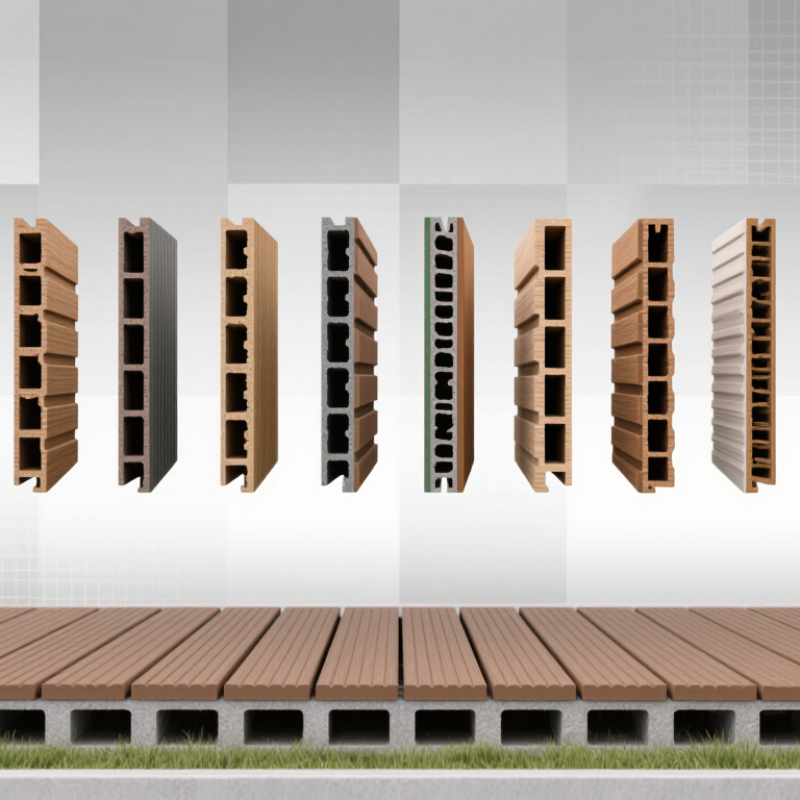
Wpc Hollow Decking has become a practical option for buyers seeking outdoor boards with a wood-like appearance and lower routine maintenance. Yet “composite decking” is not one uniform product. A hollow profile can reduce board weight, while wall thickness, internal rib design, capstock, and fastening details affect handling and performance. Small details matter. A sample cut across the board can reveal its cell structure and finish more clearly than a polished product photo.
Market reports offer useful context, but not a ready-made supplier ranking. Grand View Research’s Wood Plastic Composites Market report tracks the wider category; its market scope should not be mistaken for data on hollow decking alone. ASTM D7032 is also a relevant reference for evaluating performance requirements for wood-plastic composite decking and guardrail systems. Buyers should still request current test documentation, installation guidance, warranty terms, and production samples from each supplier. Compare like with like.
A named, independently verifiable expert quotation was not available for this introduction, so no quotation is attributed to a person. That gap is worth noting: confident-sounding industry quotes can be difficult to verify. This guide instead compares ten suppliers through practical checks, including profile consistency, surface finish, technical support, and export experience. A good-looking board is only the start. Real-world results also depend on installation and climate.
Defining Hollow WPC Decking: Typical Formulations Contain 50–70% Wood Fiber
Hollow WPC decking is not simply plastic with a wood-colored surface. Typical formulations contain 50–70% wood fiber, blended with polymers and smaller amounts of additives. A 2014 European market study by nova-Institute reported an average WPC composition of roughly 60% wood, 30% plastic, and 10% additives. That figure covers WPC products broadly, not hollow decking alone, so buyers should treat it as context rather than a specification.
Wood fiber affects stiffness, surface texture, and moisture response. Polymer type and additives influence processing and weather resistance. A hollow board also depends on its internal web thickness and cell design. Two boards with similar wood content can perform differently under foot traffic or temperature changes. That detail is easy to overlook. Formulas vary, and a percentage alone cannot predict service life.
Tips: Ask suppliers for a technical data sheet showing fiber content, polymer type, dimensions, and test methods. Compare results for water absorption and flexural strength, not just appearance. If figures lack test conditions, request clarification. Small gaps in documentation matter. A sample cut end can also reveal whether the hollow cells are cleanly formed or uneven.
How ASTM D7032 and EN 15534-4 Set Decking Performance Benchmarks
For global buyers, ASTM D7032 and EN 15534-4 provide useful, but different, reference points for WPC hollow decking. ASTM D7032 covers performance requirements for wood-plastic composite decking and guardrail systems. EN 15534-4 sets requirements and test methods for decking profiles and tiles made from wood-polymer composites. Neither standard is a vague promise of “quality.” Buyers should ask which edition was used and whether the report covers the exact profile being offered.
Look closely at the test scope. Depending on the standard and product, reports may address bending behavior, dimensional changes, water exposure, or slip-related performance. A hollow board can behave differently from a solid sample, especially around fasteners and support spans. Details matter. Request reports that identify the product dimensions, composition, and test conditions, then compare them with the proposed installation guide. A passing result does not automatically establish suitability for every climate or balcony design.
Supplier checks should also cover production consistency and traceability. Ask how batches are monitored, and whether the tested formulation matches current production. It is easy to overlook this. A useful report can still leave questions about drainage, ventilation, or fixing methods. Review those practical details with the supplier before ordering, and confirm that local project requirements are separately addressed. Standards help structure the conversation; they do not replace careful project-specific review.
WPC Hollow Decking: ASTM and EN Benchmark Areas
A standards-scope comparison for global buyers—not a ranking of suppliers or product test results.
Both standards address mechanical performance, physical properties and dimensions, and durability-related considerations for WPC decking. A value of 1 means the topic is addressed at the standard’s scope level; it is not a score, test result, or indication that the two standards use equivalent methods or limits. Check the current editions and product-specific requirements when evaluating hollow profiles.
Screening 10 Global Suppliers by Capacity, Product Range, and Export Markets
Screening ten global WPC hollow decking suppliers calls for more than comparing catalogues. Start with production capacity: ask about monthly output, typical lead times, and how the factory handles peak-season orders. Capacity figures are useful only when backed by current production records or a clear explanation of available lines. A large stated output does not guarantee reliable delivery.
Product range matters, too. Compare board widths, surface textures, colors, lengths, and matching trim. Ask whether hollow profiles have documented load and weathering test results, and request samples to inspect finish and dimensional consistency. Small details show up on site. Check how technical support handles installation questions, not just sales inquiries.
Export experience can reveal practical strengths. Ask which regions the supplier serves, what packaging is used for long-distance shipping, and whether export references can be verified. Confirm that quotations specify product dimensions, material composition, packing, and lead time. Compare these details across all ten candidates; inconsistent answers deserve follow-up. A spreadsheet helps, but it cannot prove factory performance. Some supplier records may be incomplete, so treat rankings as a starting point, not a guarantee.
Comparing Technical Data: Profile Dimensions, Load, Slip, and Water Absorption
When comparing WPC hollow decking suppliers, start with profile dimensions. A board listed as 25 mm thick may have different wall thickness, cavity layout, or usable width. These details affect stiffness and installation fit. Ask for a dimensioned cross-section, not just a product image. Small differences matter.
Load figures need context. Check the stated test method, support spacing, and whether the result describes a single board or a complete deck system. A load rating without span information is hard to apply on site.
Slip performance also depends on surface texture and test conditions, especially when boards are wet. Water absorption figures should include the test duration and method; they can help compare products, but do not predict every climate’s performance. Some supplier data sheets are incomplete. That is worth noting.
Tips: Request recent test reports alongside the specification sheet. Compare boards at the same thickness and support spacing, and confirm the moisture and slip test conditions. If the numbers look impressive but lack methods, ask for clarification before shortlisting.
I would also inspect a cut sample: hollow-cell shape and edge finish can reveal details that a brochure misses. Measurements deserve a second look.
Verifying Suppliers Through 3 Checks: Compliance, Warranty, and Logistics
For global buyers comparing WPC hollow decking suppliers, paperwork deserves the same attention as samples. Grand View Research estimated the global wood-plastic composites market at about US$7.3 billion in 2023, reflecting a crowded, expanding market—not proof that any supplier is reliable. Request current test reports for the exact profile and production site. Check slip resistance, water absorption, and dimensional stability, and confirm which recognized test methods were used. A certificate for another product line proves little.
Warranty terms should name the covered defects, duration, installation conditions, and remedy. Ask whether fading, staining, or moisture damage is excluded, and get the answer in writing. Logistics need equal scrutiny. The World Bank’s 2023 Logistics Performance Index assesses areas including shipment tracking, logistics competence, and timeliness. Ask for a sample packing list, pallet dimensions, loading photos, and a realistic port-to-site schedule. Small details matter. One vague delivery promise can leave a project waiting.
Tips: Match the warranty to your climate and installation plan. Verify compliance documents with the issuing laboratory, not only the sales contact. Request references for comparable export shipments. Paperwork can still mislead; inspect a production sample and confirm batch identification before paying a deposit.