



10 Wall Mounted Cabinet Buying Tips for Global Buyers

Buying a wall mounted cabinet for international projects requires more than comparing photographs and prices. A cabinet may look strong online, yet fail when the wall, hardware, or climate changes. Global buyers must examine dimensions, load capacity, materials, finishes, installation methods, packaging, and supplier support together.

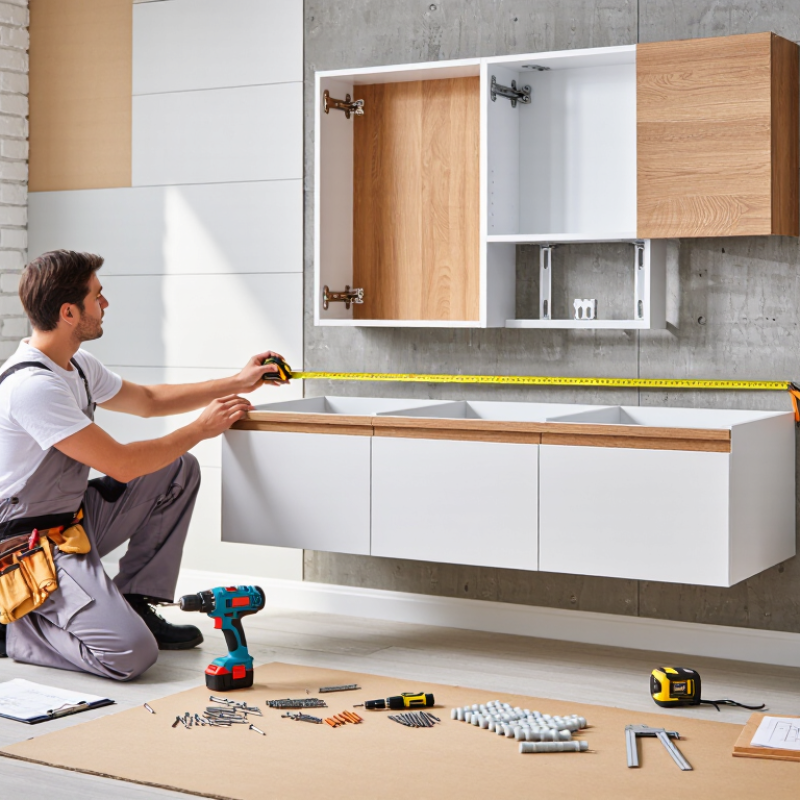
This guide shares practical lessons from sourcing, inspecting, and installing cabinets in homes, offices, hotels, and commercial spaces. Start with the wall itself. Concrete, brick, drywall, and tile require different anchors and mounting procedures. Measure twice. A few millimeters can affect door clearance, plumbing access, and delivery fit. Check whether the cabinet uses moisture-resistant board, corrosion-resistant fittings, and durable hinges. These details matter in humid bathrooms and coastal regions.

Ask suppliers for drawings, material descriptions, test information, and clear quality-control records. Confirm packing strength with photos or sample cartons, especially when shipments cross several borders. Request replacement policies before placing an order. Freight damage is not rare.

Still, no checklist removes every risk. Supplier claims should be verified through samples, inspections, and consistent documentation. A low-cost cabinet may become expensive after repairs, delays, or unsuitable installation. Buyers should also review local building requirements and product standards with qualified professionals. Requirements differ by market.

The best decision balances design, safety, service, and total landed cost. It is not always the cheapest choice. A careful process protects budgets and creates fewer surprises after delivery.
10 Wall Mounted Cabinet Buying Tips for Global Buyers

Define Use, Dimensions, and Load Needs with ISO 7170:2022

Define the cabinet’s purpose before comparing prices. Storage for documents needs different support than storage for tools or ceramic items. Record the intended contents, weight, access frequency, and installation height. ISO 7170:2022 provides useful methods for assessing storage-unit strength, durability, and stability. However, it does not replace a site-specific wall assessment.

Measure carefully. Note cabinet width, depth, door clearance, shelf spacing, and the available fixing area. A drawing may look accurate, yet pipes, uneven walls, or skirting boards can create installation problems. Ask suppliers for tested load values and clarify whether they describe evenly distributed loads or concentrated weight. That difference matters. A 40-kilogram total load can still damage one shelf if packed poorly.

Tips: Request the ISO 7170:2022 test scope, not only a compliance statement. Confirm the cabinet’s material, joint construction, cycle-test results, and fixing recommendations. Match anchors to concrete, masonry, or stud walls through a qualified installer. I would also inspect a sample, because small issues in hinges or shelf supports often appear before formal failure. Do not rely on appearance alone. Recheck the load plan after adding doors, hardware, and stored items.

Verify Panel Materials Against CARB Phase 2 Limits of 0.05–0.11 ppm

10 Wall Mounted Cabinet Buying Tips for Global Buyers

Verify Panel Materials Against CARB Phase 2 Limits of 0.05–0.11 ppm

Formaldehyde compliance starts with the panel, not the finished cabinet. CARB Phase 2 limits emissions to 0.05 ppm for hardwood plywood, 0.09 ppm for particleboard, and 0.11 ppm for medium-density fiberboard. These limits come from California’s Airborne Toxic Control Measure and remain a practical screening reference for international purchasing teams.

Ask suppliers for recent laboratory reports, not only a compliance statement. Check the panel type, thickness, production date, test method, and measured result. ISO 12460-5 chamber testing is commonly used for wood-based panels. A report should identify the tested material clearly. “Low emission” is too vague.

Inspect the cabinet edges and rear panels carefully. Some buyers test only the visible door and overlook the box material. That is a mistake. Adhesives, unfinished edges, and thin backing boards can affect indoor emissions. EPA TSCA Title VI also uses strict formaldehyde limits for composite wood, so request supporting certification when importing into the United States.

Keep batch records and compare results across shipments. One good report cannot represent every production run. In practice, paperwork may look complete while the material specification has changed quietly. Recheck when the supplier changes resin, core composition, or factory. Small details matter. Fresh air testing may also reveal odors that a single document misses.

Assess Wall Anchorage and Stability Under EN 14749:2016+A1:2022

10 Wall Mounted Cabinet Buying Tips for Global Buyers

A wall cabinet is only as stable as its anchorage. EN 14749:2016+A1:2022 assesses domestic storage furniture for safety, strength, and durability, including wall-hung units. Buyers should request test evidence, not rely on attractive product photographs. The U.S. Consumer Product Safety Commission reported 234,000 furniture tip-over injuries treated in emergency departments from 2014 to 2023. This figure includes several furniture types, but it shows why anchorage deserves serious attention.

Check the wall substrate before selecting fixings. Solid concrete, brick, timber studs, and hollow gypsum boards require different anchors and load assumptions. A cabinet may pass laboratory testing yet fail when installed into weak plasterboard. Measure the cabinet, loaded weight, fixing positions, and distance between anchor points. Ask for the tested load, safety factor, mounting hardware, and installation instructions. The European Commission’s Safety Gate 2023 report recorded 3,412 safety alerts across consumer products, reinforcing the value of traceable compliance documents.

Look closely at the upper rail, screws, brackets, and wall contact points. There should be no rocking, twisting, or visible gap after installation. Uneven floors can transfer movement into a wall unit. That detail is easy to miss. My practical rule is simple: never treat a masonry fixing instruction as universal. Installation errors remain a weak link, especially when local contractors adapt hardware without recording the change. A qualified installer should verify the wall condition, tighten fixings correctly, and recheck stability after loading.

Test Strength and Durability Using ANSI/BIFMA X5.9-2019

For global buyers, a wall-mounted cabinet is not proven safe by appearance alone. Ask whether its exact configuration fits ANSI/BIFMA X5.9-2019. This standard provides structured methods for evaluating storage-unit strength, durability, and stability. Confirm the applicable test sections with an independent laboratory.

The test sample should match the production cabinet. Check its dimensions, materials, hardware, shelf spacing, doors, and mounting points. Load shelves according to the relevant procedure, then inspect deflection, cracks, loose fasteners, and permanent deformation. Doors and drawers should endure repeated operation without jamming. It must remain functional.

Small details matter. A cabinet can pass an internal test yet perform poorly during installation. Request a report showing the tested model, configuration, loads, procedures, laboratory, and test date. A report for a floor-standing unit cannot automatically validate a wall-mounted version. That assumption is risky.

Evaluate the wall anchors and substrate separately. Concrete, steel framing, and hollow drywall require different installation methods. The cabinet may be strong, while the wall connection remains weak. Buyers sometimes focus too heavily on the cabinet body. That is an easy mistake. A more reliable review combines laboratory evidence, installation instructions, sample inspection, and production quality records. Check whether suppliers repeat testing after changing materials or hardware. Small revisions can change performance. Even experienced purchasing teams should leave room for rechecking.

10 Wall Mounted Cabinet Buying Tips for Global Buyers

Test Strength and Durability Using ANSI/BIFMA X5.9-2019

Use this five-point buyer scorecard when comparing wall mounted cabinets. Request test evidence covering structural strength, stability, shelf performance, door and hardware durability, and mounting security. ANSI/BIFMA X5.9-2019 should be used as the reference for applicable storage-unit performance testing; the scores shown are an evaluation framework, not official pass/fail values.

Compare Packaging, Incoterms 2020, MOQ, Lead Time, and Warranty

10 Wall Mounted Cabinet Buying Tips for Global Buyers

Packaging deserves more than a carton count. The UNCTAD Review of Maritime Transport 2023 reports that over 80% of global merchandise trade moves by sea. Moisture, stacking, and port handling can therefore damage a cabinet before installation. Ask for corner protection, moisture barriers, carton drop-test results, and pallet dimensions. Packaging that saves 3% may create higher replacement costs. That trade-off is easy to miss.

Compare Incoterms 2020 beside the quotation, not below it. Under FCA, the seller handles export clearance; under DAP, the buyer usually handles import duties and clearance. DDP may simplify delivery, but verify who can legally act as importer. The 2023 World Bank Logistics Performance Index shows wide differences in customs and infrastructure performance across markets. Freight estimates alone are incomplete. Request separate figures for product cost, packing, inland transport, insurance, duties, and destination fees.

MOQ, lead time, and warranty need measurable terms. A lower MOQ can reduce inventory, but may increase unit cost or weaken packaging efficiency. Ask whether lead time starts after deposit, drawing approval, or material confirmation. In my experience, this definition causes avoidable disputes. Require a written warranty period, covered components, remedy options, response time, and evidence requirements. A two-year warranty sounds strong. It means little without replacement-part availability and a practical claim process. Allow a small tolerance for delays; global supply chains are rarely perfectly predictable.

10 Wall Mounted Cabinet Buying Tips for Global Buyers - Compare Packaging, Incoterms 2020, MOQ, Lead Time, and Warranty

No. Buying Dimension Typical Benchmark to Compare What Global Buyers Should Check Contract or Document Checkpoint Risk Level
1 Cabinet Size and Load Capacity Compare external dimensions, usable internal volume, shelf adjustment, and a stated load rating. Many light- to medium-duty wall cabinets are specified for approximately 30–100 kg total load, depending on construction and mounting method. Confirm wall type, anchor compatibility, door clearance, ventilation needs, and whether the load rating applies to the cabinet body, shelves, or complete wall installation. Approved drawing showing dimensions, tolerances, shelf load, mounting points, and installation instructions. Medium
2 Material and Surface Finish Common options include cold-rolled steel, stainless steel, aluminum, or engineered wood. Powder-coated steel is widely used for indoor metal cabinets; stainless steel is generally selected for higher corrosion resistance. Compare material thickness, coating type, color standard, edge treatment, corrosion resistance, and suitability for indoor, humid, or coastal environments. Material declaration, finish specification, color reference, inspection standard, and sample approval record. Medium
3 Packaging and Drop Protection A practical export pack often combines a protective film or bag, corner guards, foam or molded inserts, a five-ply corrugated carton, and a pallet or skid for larger units. Compare packed dimensions, gross weight, carton compression strength, moisture protection, stacking limits, pallet treatment, and whether doors and glass panels are separately protected. Packaging specification, packing photos, carton marks, pallet dimensions, and pre-shipment packing inspection. High
4 Incoterms® 2020 and Landed Cost Compare EXW, FOB, FCA, CIF, and DAP based on the shipment mode, destination, insurance responsibility, customs tasks, and transfer of risk. Incoterms® 2020 defines delivery responsibilities but does not set ownership transfer or payment terms. Request a cost breakdown for product, export handling, freight, insurance, destination charges, duties, taxes, and last-mile delivery. Use named places precisely. Purchase order and commercial invoice must state the selected Incoterms® 2020 rule and the exact named place or port. High
5 Minimum Order Quantity (MOQ) Standard cabinet sizes may be available from approximately 20–100 units per model, while custom colors, dimensions, tooling, or private packaging can require a higher MOQ. Compare MOQ by model, color, finish, size, and packaging type. Ask whether mixed models can be consolidated into one production order. Written MOQ schedule, tooling charges, sample policy, overrun allowance, and cancellation terms. Medium
6 Production Lead Time For standard items, a typical manufacturing window is about 20–45 calendar days after order confirmation and deposit. Custom finishes, tooling, or peak-season capacity can extend the schedule. Separate sample time, production time, inspection time, and transit time. Confirm the start date and the effect of late approvals or material shortages. Production schedule with milestone dates, approved drawings, deposit date, inspection date, and shipment-ready date. High
7 Quality Inspection and Acceptance Use a documented inspection plan covering dimensions, coating appearance, door alignment, lock operation, shelf fit, weld quality, accessories, quantity, and packaging condition. Agree on sampling method and acceptable quality limits before production. For international orders, consider inspection before final payment and shipment. Golden sample, inspection checklist, approved tolerance range, defect classification, and remedy procedure. High
8 Warranty and After-Sales Support A common commercial warranty range is 12–24 months from delivery or installation, subject to agreed terms. Hardware, locks, coating defects, and transport damage may have different coverage conditions. Confirm warranty start date, exclusions, claim evidence, response time, replacement-parts availability, labor responsibility, and freight allocation for defective goods. Warranty certificate, claims procedure, spare-parts list, service contact, and remedy timeline. High
9 Compliance and Market Requirements Requirements vary by destination and application. Check product safety, chemical restrictions, packaging marks, timber-packaging rules, fire performance, and electrical requirements if the cabinet includes powered equipment. Do not assume that a general certificate covers every destination. Match test reports and declarations to the importing country and intended use. Applicable standards list, test reports, declaration of conformity where required, and country-specific labeling artwork. High
10 Payment Terms and Documentation Common arrangements include a deposit followed by balance payment before shipment or against agreed shipping documents. The percentage and timing should reflect order value, inspection rights, and supplier risk. Verify the legal seller, bank details, invoice information, packing list, transport document, certificate of origin if needed, and customs data before payment. Signed sales contract, payment milestones, document list, change-control process, and bank-detail verification procedure. High

Note: The benchmarks above are indicative purchasing ranges for planning purposes. Final specifications, pricing, delivery dates, compliance requirements, and warranty conditions should be confirmed in the supplier’s quotation and signed purchase contract.