



Why Choose Hengchang Quilting Machine for Your Business?

Choosing a quilting machine is a production decision, not just a purchase. It affects stitch consistency, changeover time, fabric waste, and delivery schedules. Textile Exchange’s Materials Market Report 2024 estimates that global fiber production reached 124 million tonnes in 2023. That figure describes the wider textile supply chain, not demand for quilting machines specifically. Still, it shows the scale of materials manufacturers must handle efficiently.

For businesses comparing equipment, the Hengchang Quilting Machine deserves evaluation against real production needs: material types, quilt thickness, pattern changes, operator training, and maintenance access. Look closely at the needle area, thread path, and control interface. Ask for a demonstration using fabric similar to yours. A polished sample is useful, but sustained performance across a full shift matters more. Small details matter.

Quality expert W. Edwards Deming’s principle, “Quality is everyone’s responsibility,” is relevant on the factory floor. A machine can support consistent work, but setup, inspection, and operator skill still shape results. No equipment removes every production problem. That is worth remembering. Before deciding, compare output claims with your own trial data, service requirements, and total operating costs. The right choice is the one that fits your workflow reliably—not simply the one with the most features.
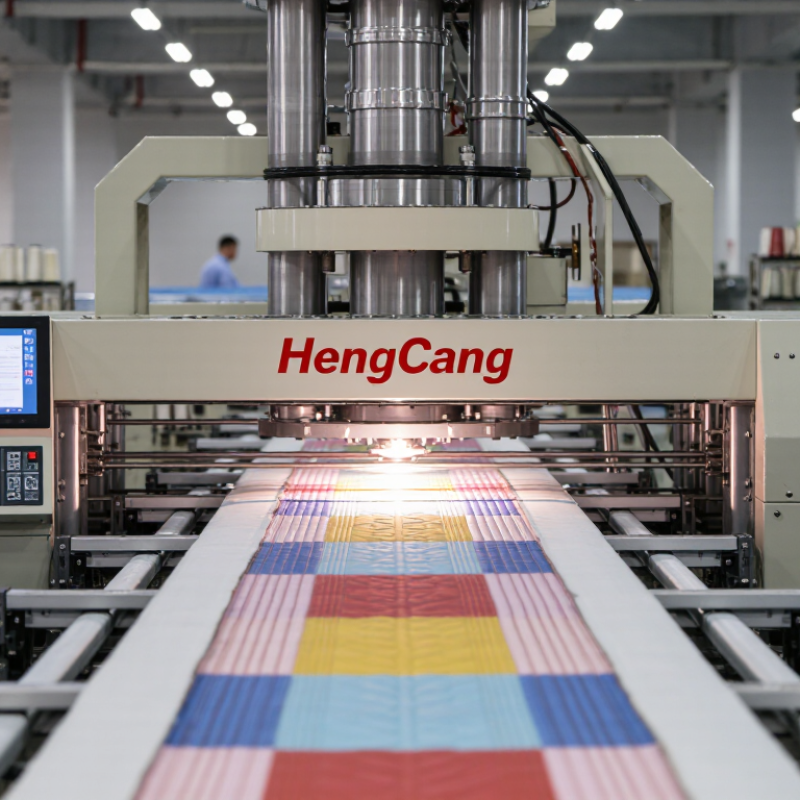
Why Choose Hengchang Quilting Machine for Your Business?

Understanding Hengchang Quilting Machines and Their Core Functions

A quilting machine joins fabric layers with a repeated stitch pattern, helping hold the top, batting, and backing together. Its needle bar forms stitches while the hook or looper catches thread beneath the fabric. Feed rollers or a moving frame guide material through the sewing area. Pattern controls can repeat geometric designs, while adjustable stitch length and thread tension help suit different fabric weights. Small details matter. Uneven tension can cause puckering, especially on thick layers.

Demand for bedding offers useful business context. Grand View Research valued the global mattress market at USD 51.7 billion in 2023 and projected a 7.9% compound annual growth rate from 2024 to 2030. This does not guarantee demand for any specific quilting line, but it highlights a sizable market. Before choosing equipment, compare the working width, speed, pattern capacity, and changeover time with your actual product mix. A fast machine is not always the right fit.

Tips: Run a sample using your own fabric stack. Check stitch consistency at the center and edges, then record settings that work. Ask operators to test loading and pattern changes, too. A detail that looks minor on a specification sheet may slow a real shift.

Why Choose a Quilting Machine for Your Business?

Quilting machines help businesses produce stitched panels in a range of sizes. The chart shows nominal U.S. mattress dimensions, illustrating the different panel widths and lengths a production setup may need to accommodate. Actual mattress dimensions can vary by manufacturer.

Evaluating Production Capacity and Material Compatibility

Choosing a quilting machine starts with the work you need it to do, not its advertised top speed. Compare usable quilt width, stitch rate, changeover time, and hours available per shift. A machine may run quickly but still miss daily targets when operators stop to reposition bulky layers. Estimate output from your own quilt sizes and shift pattern, then leave room for maintenance and rejects. Real production is rarely perfectly smooth.

Material compatibility matters just as much. Textile Exchange’s Materials Market Report 2024 estimated global fiber production at 124 million tonnes in 2023, with polyester making up 57%. That makes synthetic blends important to consider, but fiber type alone does not predict sewing performance. Test the actual face fabric, batting, backing, and combined thickness. Watch for skipped stitches, puckering, uneven feed, and needle heat. A small sample can expose problems that a sales demonstration may not show.

Tips: Bring representative fabric layers to a machine trial. Ask for a timed run using your typical quilt dimensions, then inspect the stitching after washing if the product will be laundered. Record setup time and operator adjustments. One detail is easy to overlook: a setting that works on a thin sample may fail on a thick seam. That gap deserves a second test.

Why Choose Hengchang Quilting Machine for Your Business? - Evaluating Production Capacity and Material Compatibility

Use the criteria below to assess a quilting machine for your products. Actual speed, working area, layer capacity, and material compatibility depend on the specific machine configuration and should be confirmed with a production trial.

Evaluation area Measure or material What to verify Practical business impact
Production capacity Stitch speed, measured in stitches per minute Confirm the rated speed and the speed the machine can maintain on the intended pattern and material stack. Rated speed alone does not determine finished-unit output; pattern complexity and handling time also matter.
Output planning Estimated units per hour Estimate: usable stitches per hour ÷ stitches required per item. Adjust for setup, loading, trimming, and quality checks. Provides a more realistic planning figure than maximum machine speed alone.
Working area Maximum quilting field or usable frame size Check that the usable area accommodates the largest product and the planned pattern without repositioning. A suitable working area can reduce repositioning and support consistent pattern placement.
Layer handling Fabric layers, batting, and total stack thickness Test the actual fabric-and-batting combination; confirm feeding, presser-foot clearance, stitch formation, and consistent layer movement. Successful testing helps identify shifting, skipped stitches, or uneven feeding before production.
Cotton and cotton blends Woven face fabrics and linings Check needle and thread selection, fabric weight, stitch quality, and whether layers feed evenly. A representative trial helps establish settings for repeatable quilting.
Polyester and synthetic fabrics Synthetic woven or knitted layers Check for puckering, heat sensitivity, skipped stitches, and smooth feeding at the intended operating speed. Material-specific testing can reveal whether adjustments to settings or stabilisation are needed.
Batting and lofted fills Polyester, cotton, or blended batting Test the chosen loft and stack thickness for compression, stitch formation, and reliable movement through the machine. The result depends on the combined quilt stack, not on the face fabric alone.
Product changeover Setup time between patterns, sizes, or materials Record changeover time during a trial, including pattern loading, alignment, and setup adjustments. Shorter, repeatable changeovers can improve effective capacity when producing varied orders.
Quality and uptime First-pass quality, stoppages, and maintenance needs Track accepted items, rework, interruptions, and routine maintenance during a representative production run. Consistent quality and dependable operation affect saleable output and delivery planning.

Before purchasing, run a sample using the intended pattern, product size, thread, fabric, and batting. Record cycle time and quality results, and verify all machine specifications with the supplier.

Examining Automation, Stitch Precision, and Operating Efficiency

For a quilting business, automation is valuable when it keeps production steady without hiding problems. A programmable machine can repeat stitch patterns, manage speed, and reduce constant manual adjustments.

Deloitte and MAPI’s 2019 smart factory study found that 86% of surveyed manufacturers expected smart factories to be important for competitiveness by 2025.

That finding reflects broad manufacturing expectations, not a guarantee of savings for every quilting shop. Check how easily operators can set patterns, change materials, and spot thread breaks. Small details matter.

Stitch precision depends on more than speed. Consistent fabric feeding, stable thread tension, and accurate needle timing help keep seams aligned across large panels.

The International Federation of Robotics reported 4.28 million industrial robots operating worldwide in 2023, up 10% from 2022.

This signals wider investment in automation, though it does not measure quilting quality directly. Test the machine with your own batting and fabric; a neat sample on thin cotton may not predict results on a thick quilt. Watch the needle. Listen for strain. And be honest: automated settings still need skilled setup, regular maintenance, and occasional correction.

Assessing Machine Durability, Maintenance, and Technical Support

A quilting machine’s durability shows up in ordinary production hours, not just in a showroom demonstration. Run a representative fabric-and-batting sample for several hours. Watch for skipped stitches, unusual vibration, heat around the drive system, and changes in stitch tension. These small signs can reveal wear before it causes a costly interruption. Ask for service records and confirm which components are designed for routine replacement.

Maintenance should fit the pace of the workshop. Clear lint from the bobbin area and check needle condition at scheduled intervals. Keep a simple log of lubrication, adjustments, faults, and replaced parts. It takes little time. Still, maintenance schedules can vary with fabric thickness, operating speed, and daily workload, so generic intervals may not suit every shop. No machine is maintenance-free, and a sales estimate is not a guarantee.

Technical support matters most when production stops. Before purchase, ask how quickly technicians usually respond, whether remote troubleshooting is available, and which spare parts are kept in stock. Check that instructions are clear enough for operators to follow without guessing. A short training session can prevent repeated tension problems and avoidable setup errors. Support quality is difficult to judge from a brochure; a practical trial and direct conversation with service staff offer better evidence.

Comparing Costs, Business Benefits, and Long-Term Value

A quilting machine should be judged by more than its purchase price. Compare the full cost of ownership: installation, operator training, electricity, maintenance, spare parts, and production downtime. The U.S. Department of Energy reports that motor-driven systems account for about 54% of electricity use in American manufacturing. This is an industry-wide benchmark, not a machine-specific saving. Ask for the machine’s rated power, then estimate energy cost using your local rates and expected operating hours. Small details matter: needle changes, thread breaks, and awkward roll handling can quietly reduce daily output.

Long-term value also depends on whether capacity matches real orders. Textile Exchange’s Materials Market Report 2024 estimates that global fiber production reached 124 million tonnes in 2023. That figure describes the wider textile supply chain, not quilting demand, so it should not be treated as a sales forecast. Compare machines using a realistic production test, including setup and changeover time, rather than headline speed alone. Include warranty coverage and the availability of common replacement parts in your cost comparison. One assumption deserves scrutiny: higher output does not automatically mean better value if demand is uneven. I would compare several years of expected costs against saleable output, and revisit the estimate when labor or energy prices change.