China Best Racks for Storage How to Choose?
Choosing the best racks for storage in China starts with the goods, the building, and the daily workflow—not a product photo. A rack that suits cartons may waste space around long steel profiles. A system built for pallets may be awkward for small parts. Measure the load first. Note its weight, dimensions, turnover rate, and handling equipment. Then check clear ceiling height, aisle width, floor condition, and access for forklifts or staff.
Warehouse-planning expert James A. Tompkins has written extensively about designing facilities around operational needs. A practical takeaway from his approach is: “Choose the rack for the workflow, not the sales photo.” This is an editorial paraphrase, not a verbatim quotation. It captures a point buyers can easily overlook: a low purchase price means little if picking becomes slow or stored goods are hard to reach.
This guide explains how to compare rack types, materials, load ratings, and supplier information. Look closely at beam dimensions, upright protection, finish quality, and installation requirements. Ask suppliers for clear specifications and load data for the proposed configuration. Do not assume two similar-looking systems carry the same weight. A detail can change everything. Real warehouses are rarely perfect; columns, uneven floors, and changing inventory complicate neat plans. Leave room to review those limits before ordering. The right racks for storage should fit today’s operation while allowing sensible adjustments as stock and workflows change.
What Are Storage Racks and How Are They Used?
A storage rack is a frame with shelves, beams, or platforms that holds items above the floor.
Racks come in different sizes and materials, from light-duty household shelving to heavy-duty systems used in stockrooms. Their main purpose is simple: keep goods organized, visible, and easier to reach.
Less clutter, fewer misplaced boxes.
At home, a rack can hold pantry jars, folded towels, or labeled plastic bins in a garage. In a workshop, it may separate tools and spare parts by type. Retail and warehouse teams use larger racks to store cartons and supplies, often placing frequently needed items at waist or eye level.
The right layout depends on what is stored, how often it is handled, and how much room is available.
Before loading a rack, check its rated capacity and spread weight evenly across each shelf. Put heavier objects low, and secure tall units as the manufacturer recommends. A rack that fits the room may still be awkward if its shelves are too deep or its top level is hard to reach.
Measure the items, floor space, and access path first.
Even then, plans change; leave a little room for the box that never matches the measurements.
Which Types of Storage Racks Are Available in China?
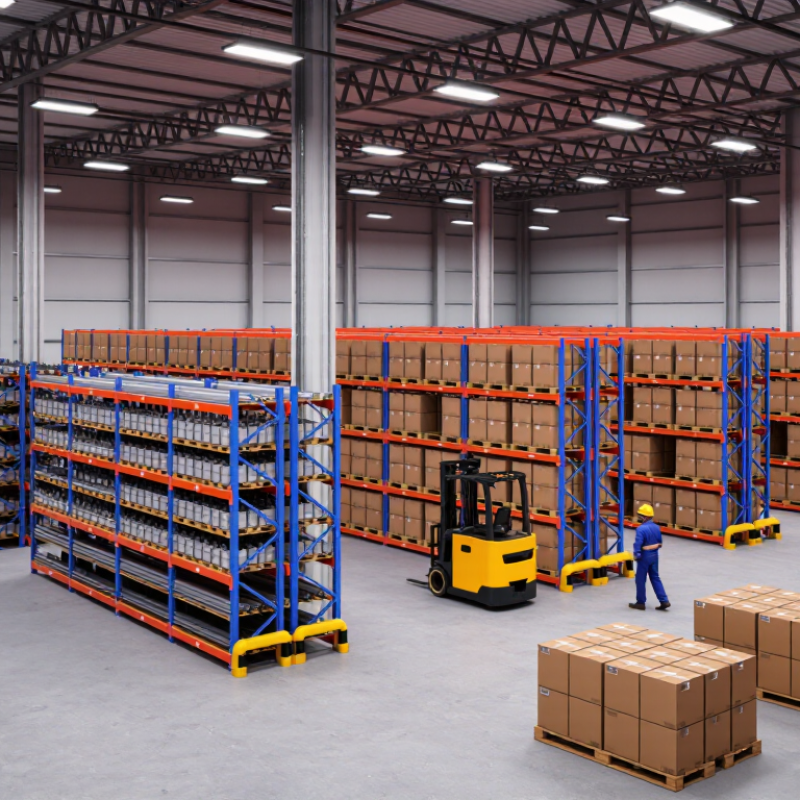
China offers several storage-rack types, each suited to different goods and picking routines. Selective pallet racks provide direct access to each pallet, making them practical for mixed stock and frequent order changes. Drive-in racks store pallets deeply in lanes, trading selectivity for higher space use. Push-back systems suit multiple pallets of the same product, while cantilever racks hold long items such as pipes and timber. For cartons and small parts, adjustable shelving can be easier to reach by hand.
Space matters. Measure clear height, aisle width, floor condition, pallet dimensions, and the reach-truck turning area before choosing a layout. A tidy drawing can still hide awkward columns or blocked sprinkler access.
MHI’s 2024 Annual Industry Report found that 55% of surveyed supply-chain leaders planned to increase technology investment. That figure concerns technology, not rack purchases, but it signals why automated options deserve consideration. Mobile racks and automated storage and retrieval systems can improve space use and reduce travel, yet they need compatible equipment, controls, and maintenance planning.
Mezzanine platforms add storage above an existing floor, but require careful checks for load capacity and safe access. Measure twice. The best fit depends on inventory turnover, load weight, handling equipment, and future changes; choosing the densest system alone can make daily picking slower.
What Storage Needs Should Guide Your Rack Selection?
Choosing a storage rack begins with the stock, not the catalogue. List each item’s dimensions, weight, packaging, and turnover rate. Then map how goods move: pallets by forklift, cartons by hand, or small parts in bins. Fast-moving stock often needs clear, reachable pick faces. Slow-moving reserve stock can sit higher, if equipment and safety controls allow it. Measure the actual aisle width. A drawing can make a tight turn look generous.
Demand also shapes the layout. The U.S. Census Bureau reported that e-commerce made up 16.1% of U.S. retail sales in 2024, in its 2024 Annual Retail Trade Survey. That shift can mean more individual picks, returns, and short-term staging—not just more pallet storage. Check ordinary and peak-season inventory separately. Measure twice. Designing only for today’s average stock is an easy mistake.
Match rack capacity to the heaviest planned load, including pallet and packaging weight. Confirm the floor condition, ceiling height, sprinkler clearance, and handling equipment with qualified site professionals. OSHA’s 29 CFR 1910.176(b) requires stored materials to be stable and secure against sliding or collapse. Leave room for inspection and damaged-load removal. It may feel wasteful. Crowded aisles can slow picking and make safe handling harder. Revisit the plan when product sizes or workflows change; racks do not correct a poor inventory mix.
China Best Racks for Storage: How to Choose?
Start with the Pallet Footprint Your Rack Must Hold
Measure the pallets or loads you actually store before choosing rack dimensions. These are common pallet footprints; confirm load weight, overhang, aisle clearance, and local safety requirements with a qualified rack designer.
How Do Load Capacity, Materials, and Layout Affect Your Choice?
China Best Racks for Storage: How to Choose?
Start with the weight each shelf must carry, not the rack’s overall capacity. Add the stored items, containers, and any likely future load. Then check the manufacturer’s rated capacity per shelf and for the complete unit. A safety margin matters. Unevenly distributed boxes can put extra pressure on one section. It is easy to underestimate this when items arrive gradually.
Material choice depends on the space and what you plan to store. Steel racks suit many heavy-duty uses, while lighter options may work for small household items. In damp areas, check the finish and maintenance requirements to help limit corrosion. Layout matters just as much. Measure the rack, doorways, and aisle space before buying. Leave room to reach frequently used items and move bulky boxes safely. A plan can look neat on paper, yet feel cramped in daily use.
Tips: Keep heavier items on lower shelves. Label shelf limits clearly, and recheck them when your storage needs change. Confirm that the floor can support the loaded rack, and follow the installation instructions. A little measuring now can prevent awkward rearranging later.
How Can You Evaluate Chinese Storage Rack Manufacturers?
When evaluating Chinese storage rack manufacturers, verify engineering controls rather than judging by price or polished catalogues. Ask for rack drawings, stated load limits, and test records for the exact beam-and-upright configuration you plan to buy. Ask for evidence. A load rating without its test conditions is difficult to assess.
The World Steel Association’s World Steel in Figures 2024 reports that China produced 1,019.1 million tonnes of crude steel in 2023, about 54% of global output. That scale supports a substantial supply base, but it does not prove any factory’s rack quality. Check steel mill certificates, incoming-material records, weld inspection procedures, and coating-thickness measurements. Compare these with a physical sample and the final production batch. The MHI 2024 Annual Industry Report found that 55% of respondents planned to invest more than US$1 million in supply-chain innovation. For buyers, that makes a supplier’s engineering and traceability systems worth examining, not just its production capacity.
Visit the factory if practical. Watch operators check hole spacing and beam connectors, and ask how rejected parts are logged. Review recent inspection reports and request references for installations with similar loads and operating conditions. Confirm who approves design changes and how replacement parts are identified. A checklist can still miss inconsistent records or a rushed production run; independent inspection before shipment can reduce that gap.